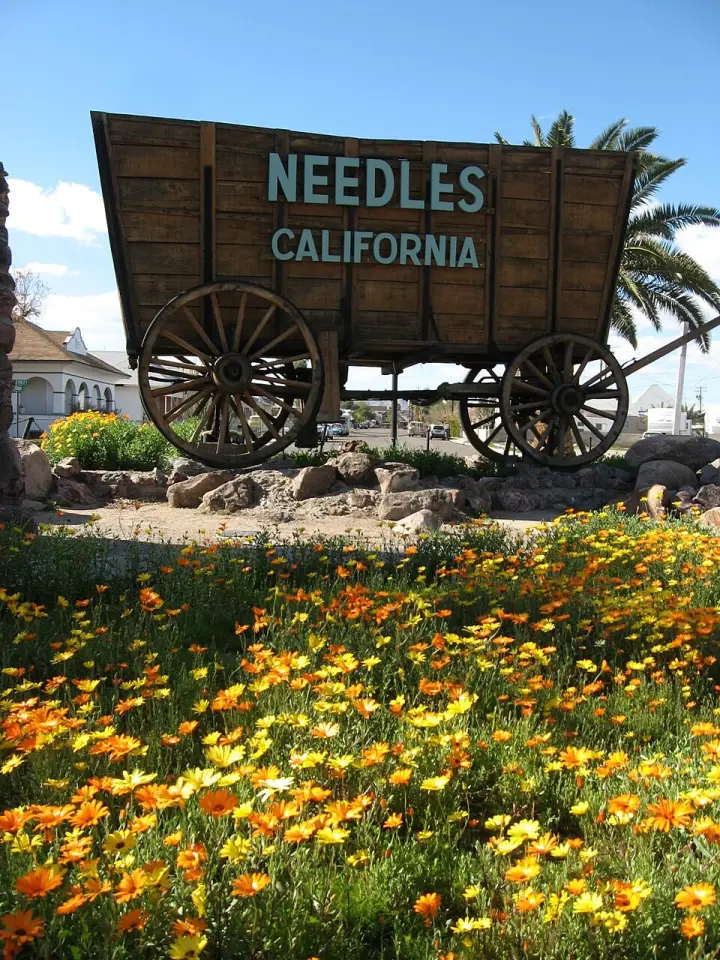
On the Colorado River at the Arizona line, Needles was the first California stop for Route 66 drivers heading west.
1,940 mi from Chicago
3 stories to hear
Free in the app through 2027
Allow one cookie to recognise return visits? No cross-site tracking. Privacy
About Needles
Needles began in May 1883 as a tent town for crews building the Santa Fe railway, and took its name from “The Needles,” pinnacles on the Arizona side of the Colorado River. In 1908 the railway and the Fred Harvey Company built El Garces, a hotel and station considered the “crown jewel” of the Harvey chain.
Route 66 followed Broadway Street through town, and Needles is still lined with motels and shops from that era. For Dust Bowl migrants in the 1930s, this was where California began; in The Grapes of Wrath, the Joad family stops here. Charles Schulz lived in Needles from 1928 to 1930 and made it the home of Snoopy's brother Spike.
On the road, Lorecast plays these on its own as you drive past each place. Here you can listen first. Each story lists its sources.
QUIRKY · TOLD BY MILES · 38 SEC
The hottest rain on record
Here's a weird one: Needles once recorded rain at 115°F — the hottest rain in world history. On August 13, 2012, a thunderstorm dumped rain when the air was 118°F. The humidity was just 11%, so the rain mostly evaporated before hitting the ground. Only a trace was measured. Weather records researcher Maximiliano Herrera confirmed it was also the lowest humidity ever recorded with rain on Earth. So in Needles, you can get rain that's hot enough to almost not exist.
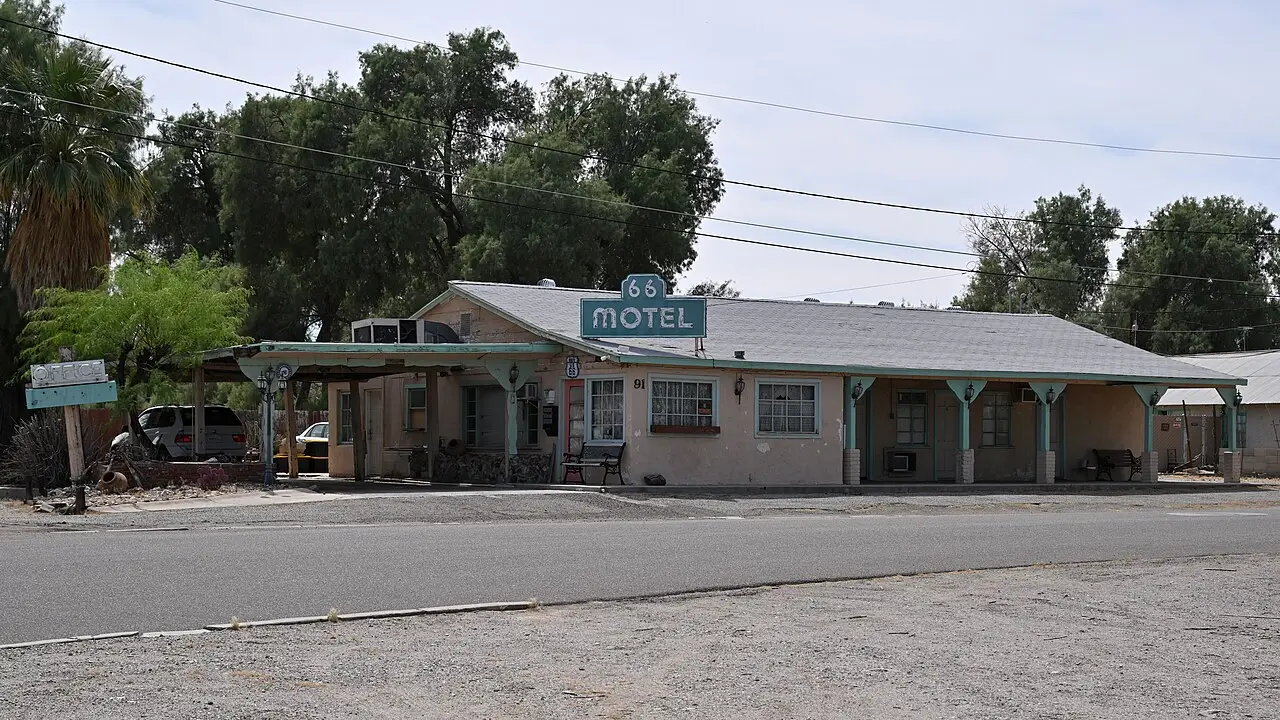
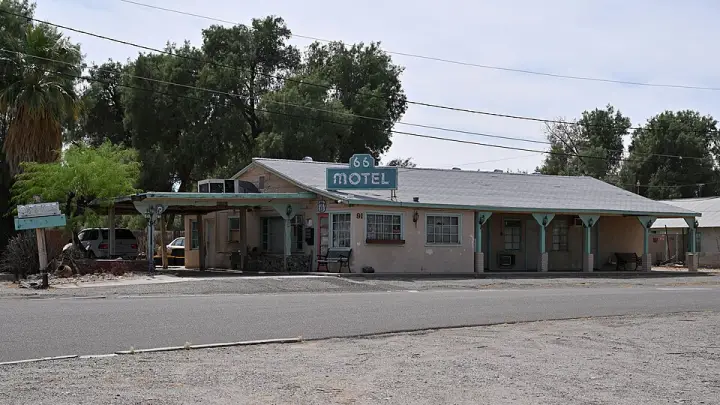
The 66 Motel opened in 1946–47, catching Route 66 travelers at its peak. Then Interstate 40 bypassed it around 1970. Since the 1990s, it's been single-room occupancy apartments — a quiet afterlife for a roadside relic.
In 1883, the Atlantic and Pacific Railroad needed to cross the Colorado River. The spot they chose, three miles southeast of Needles, had no solid ground on either side. The river was over 1,600 feet wide. And the flood season started in May. For three months, crews drove wooden pilings into the riverbed, only to watch the current wash them away. They kept at it, and eventually the first bridge stood. On the east bank, a station was built. They called it Eastbridge. That name—a quiet marker of a hard-won crossing.
Built in 1908 as a Santa Fe station with a Harvey House hotel and restaurant, the “crown jewel” of the Harvey House network. The east third was torn down in 1961; today it is the Amtrak station and bus depot.
A six-room motel built in 1946–47 for Route 66 travelers. Its green 66 and red MOTEL neon were relit in 2012; since the 1990s the rooms have been rented by the month.
The tourist cabins whose sign is among the first sights of California in John Ford's 1940 film The Grapes of Wrath. Their abandoned remains stand behind the 66 Motel.
Route 66 followed Broadway through Needles, a town still lined with motels and shops from the highway's era. Murals of the old road have been painted in town.
The 1915–16 arch bridge that carried Route 66 over the Colorado River into Arizona until 1947. It still stands, carrying a natural gas pipeline, and appears in the films The Grapes of Wrath and Easy Rider.
A ghost town on old Route 66 that began in 1882 as a railroad water stop. It later lived off highway travelers, with a motor court, the Ludlow Cafe and a garage; after I-40 bypassed it, most residents left.
Lorecast plays short stories about the places around you, hands-free. Download Route 66 before you leave and it works offline. Route 66 is free through December 31, 2027.
How these stories are made
Lorecast stories are written with AI using only the sources listed under each story, and they are narrated with synthetic voices. An automatic check traces every name and date back to those sources, and legends are told as legends. Every story on this page was also checked against its sources before we published it here. If you spot a mistake, write to hello@lorecast.net.