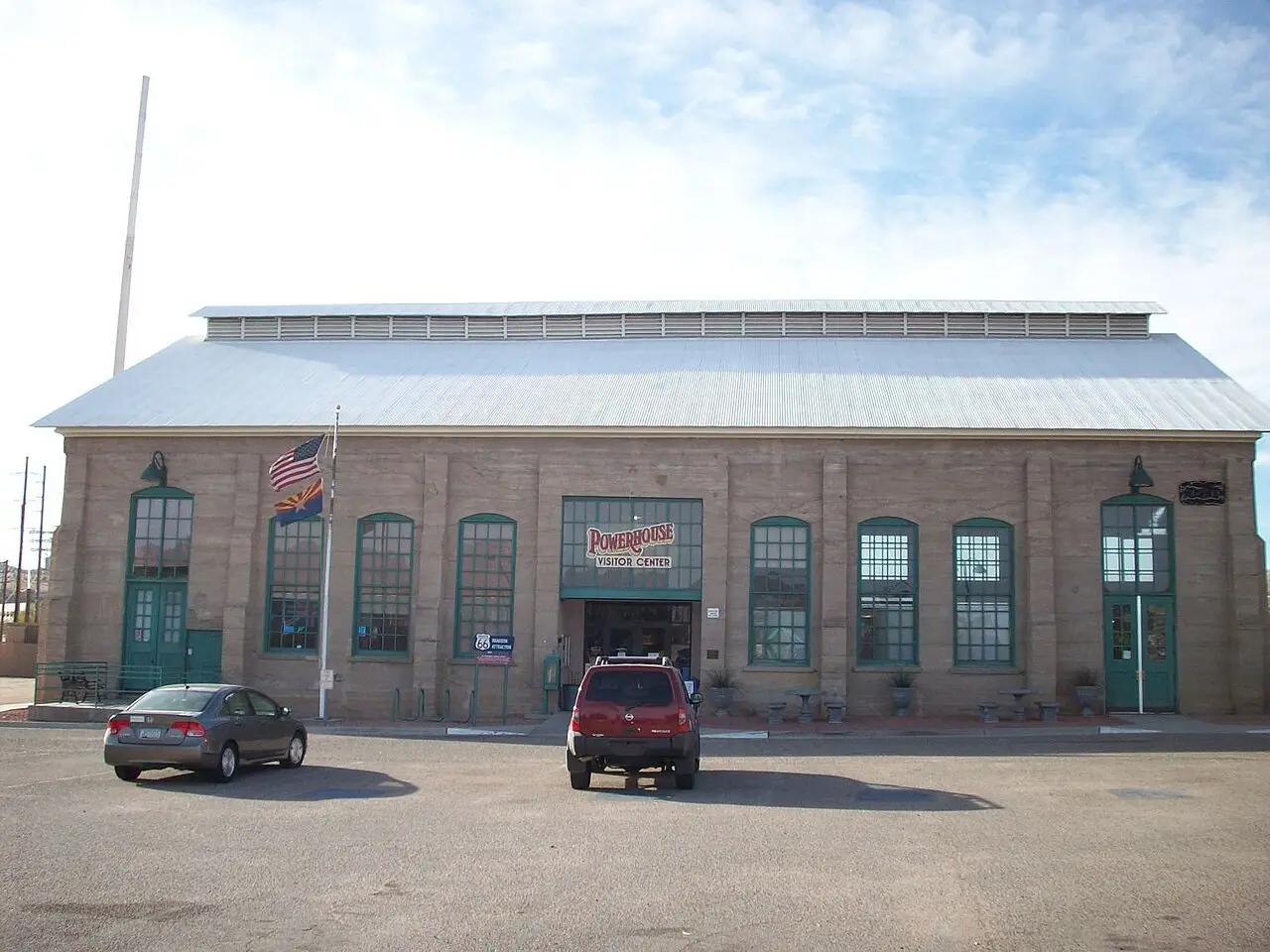
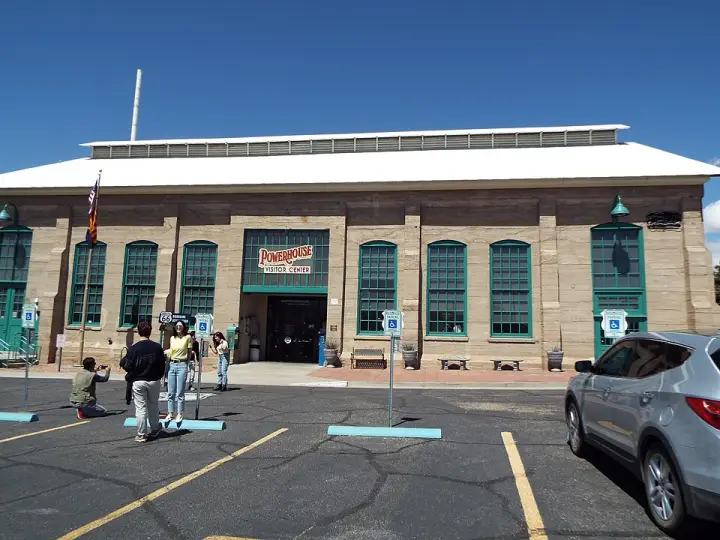
The Mohave County seat, where Route 66 runs along Andy Devine Avenue past a 1907–08 power plant that now houses the Arizona Route 66 Museum.
1,870 mi from Chicago
5 stories to hear
Free in the app through 2027
Allow one cookie to recognise return visits? No cross-site tracking. Privacy
About Kingman
Kingman was founded in 1882 as a railroad siding near Beale Springs. It is named for Lewis Kingman, the Atlantic and Pacific Railroad engineer who supervised building the line from Winslow to Beale Springs, and it has been the Mohave County seat since 1887.
Route 66 followed Main Street, now Andy Devine Avenue, and met US 93 where Locomotive Park is today. Interstate 40 bypassed Kingman in 1978, but the old road east of town survives as State Route 66 toward Hackberry and Peach Springs, and the Powerhouse Visitor Center houses a museum dedicated to Historic Route 66.
On the road, Lorecast plays these on its own as you drive past each place. Here you can listen first. Each story lists its sources.
HISTORY · TOLD BY MILES · 56 SEC
The power plant that became a Route 66 museum
You know that old power plant on Andy Devine Avenue? It was built in 1907–08, an oil-fired steam plant considered one of the largest in the Western United States. For thirty years it lit up Kingman, until Hoover Dam took over in 1938. Then the building sat empty, later a salvage yard. But in 1984, two local women—Lilia Bumbullis and Cynthia McCafferty—started a group called 'The Powerhouse Gang.' Their pitch? 'Join the Powerhouse Gang – Electrify Kingman.' They raised funds, and in 1997 the building reopened as a visitor center. A front-page article in The Kingman Daily Miner called it 'a visitor center designed to generate tourism energy.' Today it houses the Route 66 Museum and tourism office.
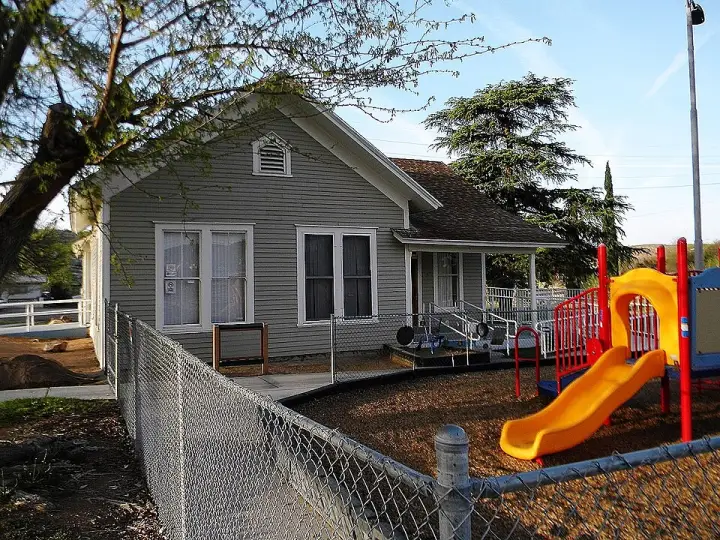
In 1893, a Queen Anne style house went up at 4th and Golconda Streets in Kingman, Arizona. But the story behind it starts earlier, with a man who stopped for one night and never left. Harvey Hubbs arrived in Kingman and his horse disappeared—stolen or lost—along with all his belongings. Stranded, he took a job as a teamster for the mines. Around the same time, Johanna Wilkinson was in Los Angeles when she got a letter from her brother Tobi, who was working on a railroad crew near Kingman. He said the workers had little to eat, and if she came to cook, she could make good money. Johanna and her sister Francis hired a teamster, hauled supplies, and set up a tent with a cast iron stove. Soon miners joined the workers for meals, and the sisters added another tent with cots for sleeping. Harvey likely met Johanna while eating at her tent restaurant. They married in 1887 and built Kingman's first hotel, the Hubbs House. That hotel caught fire nine times and burned down twice—once in the Kingman Fire of 1898. Many fires were started by miners and workers smoking opium, which was sold over the counter then. Water had to be hauled from a spring two miles away, so fires couldn't be fought. Each time, the Hubbs rebuilt. The second Hubbs House Hotel was Kingman's first two-story building. After it burned completely, Harvey built the Hotel Beale, considered Kingman's most luxurious hotel. In 1906, he sold it to the Devine family. The Hotel Beale still stands, though in disrepair. The Hubbs House itself—the Queen Anne home—was the first in Kingman with running water. It's now owned by the city and used by Head Start.
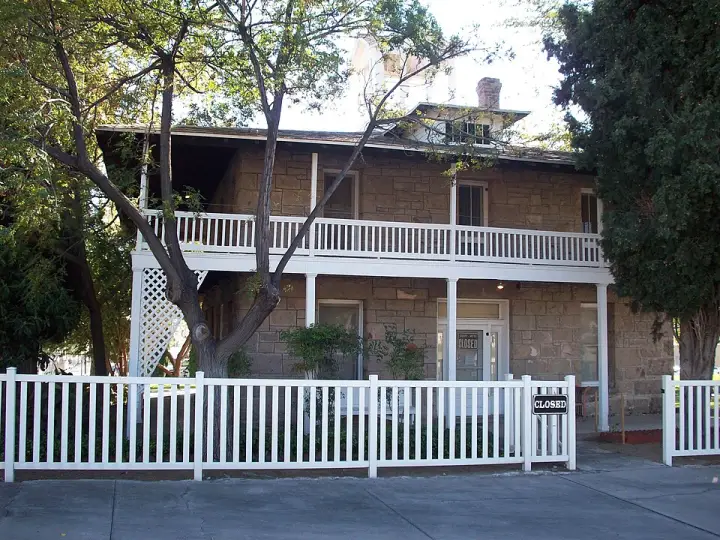
In 1915, George Bonelli built a house in Kingman, Arizona, but it wasn't his first on that property. The original home burned down that January. So he started over, this time using local Peach Springs Tuff stone from Metcalfe Quarry—thick walls, 18 to 22 inches wide, to keep the desert heat at bay. The house is two stories, rectangular, with a low hipped roof and dormers, and a veranda wrapping three sides. Inside, early plumbing and wiring remain, updated to code, and many original furnishings are still there. The Bonellis raised nine children and ran four businesses: a large ranch, a general store, a jewelry store in Kingman, and another general store and meat market about twenty miles northwest in Chloride. Today, the city owns the house, and the Mohave County Historical Society runs it as a museum.
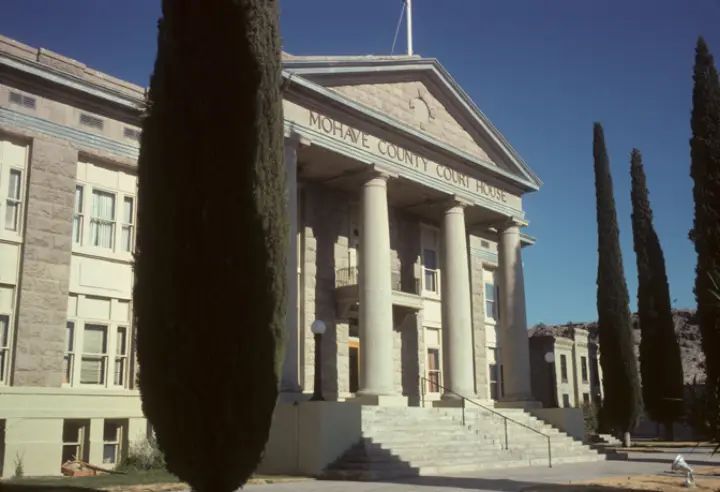
You'd expect a courthouse to be built first, then a jail to hold the troublemakers. Here, it was the other way around. The jail went up in 1909, because the old one couldn't keep prisoners inside — they kept breaking out. Six years later, in 1915, the courthouse followed, designed by the Phoenix firm Lescher & Kibbey. It was built with native cut stone from the Metcalfe Quarry, and its Neoclassical style was meant to project democratic ideals — especially fitting for Arizona, which had become a state just two years earlier. The county used the courthouse for 70 years. As for the jail, it's still there, tucked between the courthouse and a much larger superior court building. In 1984 it served as county offices. Today, a modern jail on Historic Route 66 holds 688 beds. But these two buildings, side by side, still tell the story: first, lock them up; then, judge them.
The House at 105 Spring Street in Kingman, Arizona, was built around 1911 by a woman named Mary Eleanor Cohenour. She was no ordinary homeowner—she was the former wife of the Mohave County Sheriff and Postmaster, and she developed the Pleasant View addition to downtown Kingman, building her own home as the anchor. The house is a Bungalow/Craftsman style, with native stone porch columns and foundation, concrete lintels and sills, and 4/1 lite double hung wood windows. But here's the real story: in 1928, Cohenour became the first woman to pilot her own automobile from Kingman to Signal, Arizona. She was a successful businesswoman, and this house was her base. It was listed on the National Register of Historic Places in 1986, part of a larger survey of Kingman's historic resources.
Powerhouse Visitor Center and Arizona Route 66 Museum
The 1907–08 Desert Power & Water Co. plant on Andy Devine Avenue, once one of the largest steam electric plants in the West. It opened as a visitor center in 1997 and houses the Arizona Route 66 Museum.
Santa Fe No. 3759, a 4-8-4 locomotive built by Baldwin in 1928, has been on display here since 1957, at the old junction of US 66 and US 93. In 1955 it ran the Santa Fe’s “Farewell to Steam” excursion.
The Santa Fe built this poured-concrete depot in 1907, after two earlier stations burned. Restored by the city, it holds an Amtrak waiting room and a railroad museum.
On Spring Street at North 4th Street: a Neoclassical courthouse of native cut stone, built in 1915 to a design by Lescher & Kibbey, beside the 1909 jail that replaced one prisoners kept breaking out of.
A two-story 1915 house of Peach Springs Tuff stone, with walls up to 22 inches thick, at Fifth and Spring Streets. The city owns it, and the Mohave County Historical Society runs it as a house museum.
Founded in 1961 and in its own building since 1968, the museum covers northwestern Arizona: a Hualapai room with a full-size wickiup, an exhibit on actor Andy Devine, who grew up in Kingman, and a 1923 caboose.
A former mining town on State Route 66, 28 miles northeast of Kingman, left 16 miles from Interstate 40. In 1992 artist Bob Waldmire reopened the Hackberry General Store as a Route 66 information post and souvenir shop; the store remains in operation, with a collection of vintage cars.
A 1915 gold-rush town in the Black Mountains, on the original Route 66 over Sitgreaves Pass. A new route between Kingman and Needles bypassed it, and by the 1960s it was all but abandoned; today it is a Route 66 stop with wooden sidewalks, staged shootouts and wild burros in the streets.
Lorecast plays short stories about the places around you, hands-free. Download Route 66 before you leave and it works offline. Route 66 is free through December 31, 2027.
How these stories are made
Lorecast stories are written with AI using only the sources listed under each story, and they are narrated with synthetic voices. An automatic check traces every name and date back to those sources, and legends are told as legends. Every story on this page was also checked against its sources before we published it here. If you spot a mistake, write to hello@lorecast.net.