Where the Mother Road begins: the “Begin Historic Illinois U.S. Route 66” markers stand on Adams Street at Michigan Avenue.
0 mi from Chicago
4 stories to hear
Free in the app through 2027
Allow one cookie to recognise return visits? No cross-site tracking. Privacy
About Chicago
Route 66 began in Chicago. Its original 1926 terminus was at Jackson Boulevard and Michigan Avenue; in 1938 the route was extended two blocks east through Grant Park, past Buckingham Fountain, to end at Lake Shore Drive.
In the Loop the highway follows Jackson Boulevard, one way eastbound since 1955, so westbound Route 66 uses Adams Street. The Jackson and Adams bridges over the Chicago River and Joliet’s Ruby Street Bridge are the only movable-span bridges left on the whole route.
On the road, Lorecast plays these on its own as you drive past each place. Here you can listen first. Each story lists its sources.
HISTORY · TOLD BY MILES · 66 SEC
Where Burnham drew the Plan of Chicago
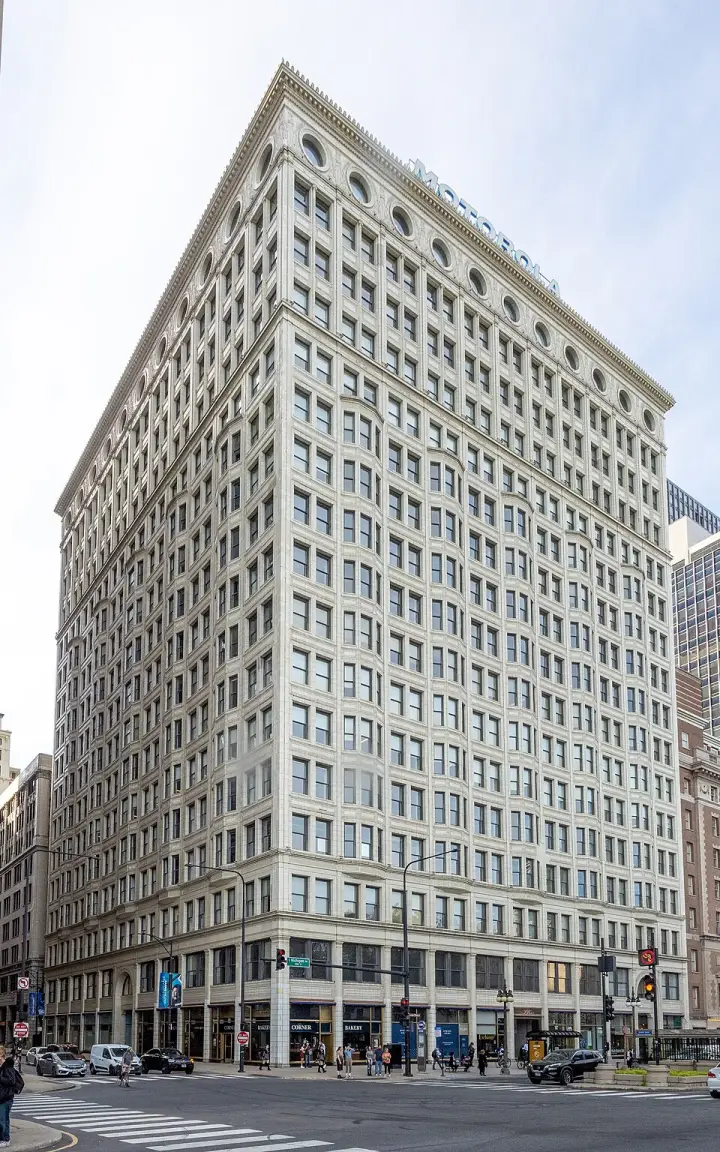
In 1909, the man who dreamed Chicago's future worked in a penthouse at 224 South Michigan Avenue. Daniel Burnham and his staff drew the Plan of Chicago there, in the building we call the Railway Exchange, also known as the Santa Fe Building. Opened in 1904, it was originally built as a railway exchange for the Santa Fe railway. It's a 17-story office building, white-glazed terracotta outside, with round porthole windows along the cornice. Burnham & Company had offices on the 14th floor, and Burnham's descendants owned it until 1952. Legend has it Burnham himself demanded the impressive formal entrance on Jackson Boulevard, which in 1904 mattered more than Michigan Avenue. The building's roof once carried the Santa Fe sign; in 2012, it was replaced with an illuminated Motorola sign, and the old Santa Fe letters went to the Illinois Railway Museum, restored and displayed in 2016.
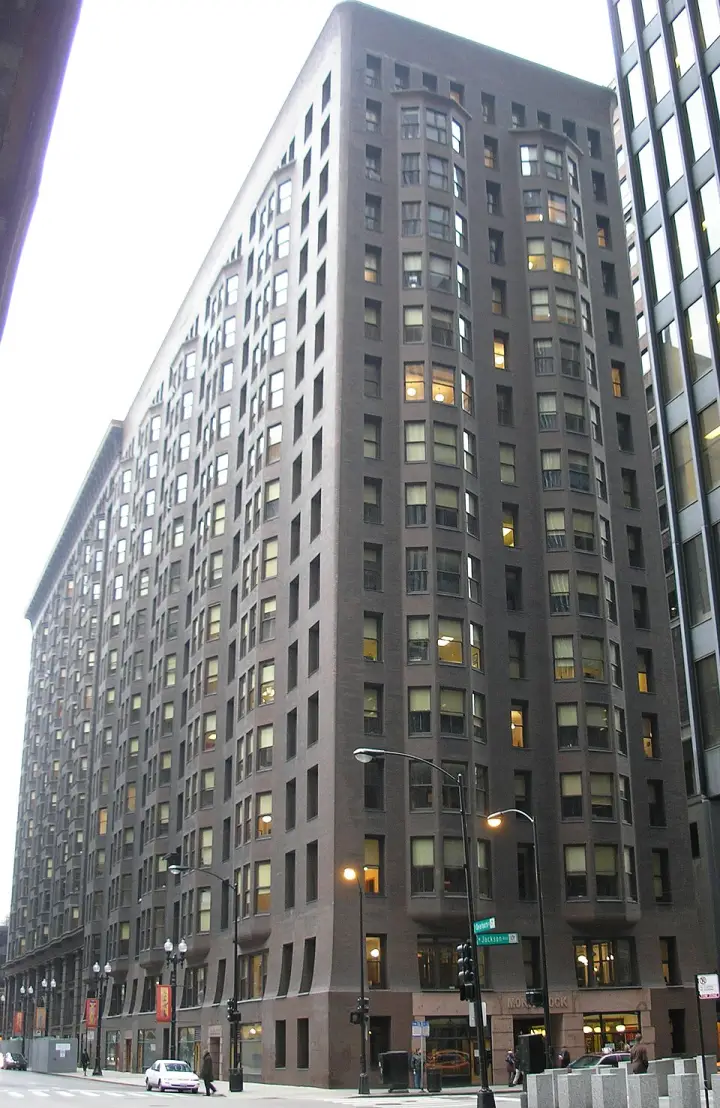
You know that feeling when a building seems to defy logic? The Monadnock Building does exactly that. It's a 16-story skyscraper at 53 West Jackson Boulevard in Chicago, completed in two halves. The north half, designed by Burnham & Root, started construction in 1891. At 215 feet tall, it's the tallest load-bearing brick or masonry building ever built — no steel skeleton, just thick walls carrying the weight. That's the mystery: how does it stand? The answer is partly in its pioneering portal system of wind bracing, the first in the United States. And inside, its ornamented staircases hold another first: the structural use of aluminum in building construction. The south half, added in 1893 by Holabird & Roche, matches the color and profile but is more ornate. So next time you see a glass tower, remember this brick giant that pushed the limits of what masonry could do.
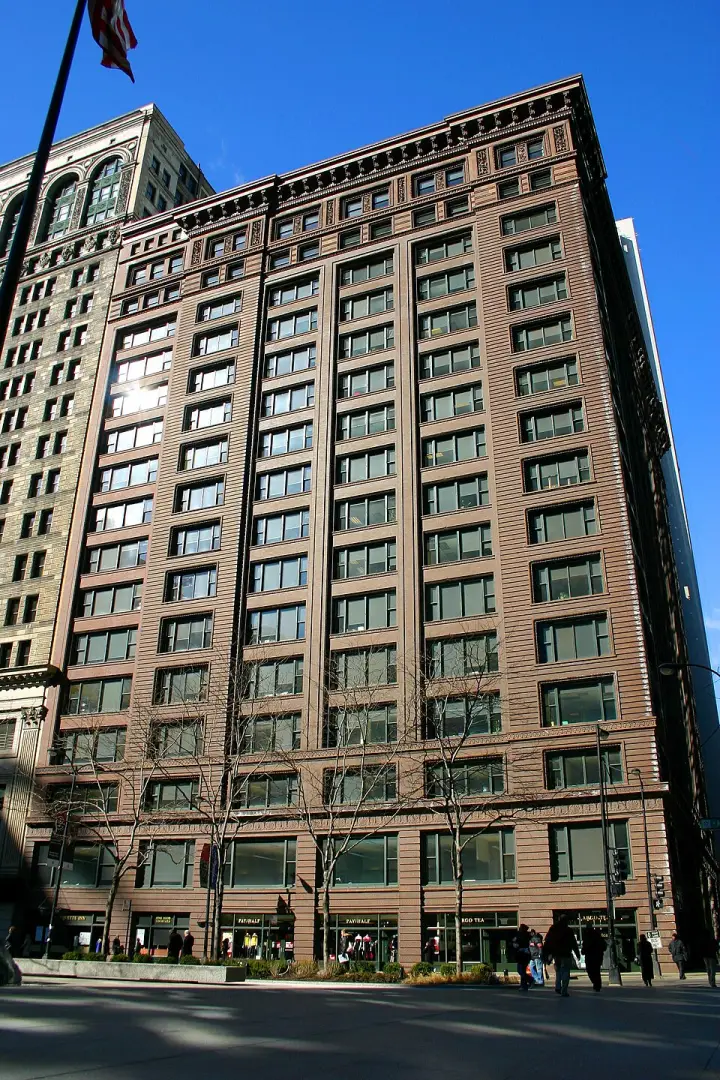
Why would a steel-frame office tower completed in 1895 carry a two-story lobby lined with mother-of-pearl and semi-precious stones? The Marquette Building, built by the George A. Fuller Company and designed by Holabird & Roche, was one of the first steel-frame skyscrapers, an early example of the Chicago School of architecture. Its long horizontal Chicago windows and wave-like terra cotta marked a new way to build tall. But the architects did not stop outside. Over the main entrance, four bronze relief panels by sculptor Hermon Atkins MacNeil show scenes from Father Jacques Marquette's 1674–5 expedition, ending with his burial. Inside, Tiffany studio mosaics use lustered glass, mother-of-pearl, and semi-precious stones. The revolving door panels carry carved panther heads. For decades, the reddish terra cotta exterior blackened under Loop soot. A four-year restoration by the MacArthur Foundation finished in 2006 and brought back the original reddish terra cotta. Legend has it Father Jacques Marquette was the first European settler in Chicago.
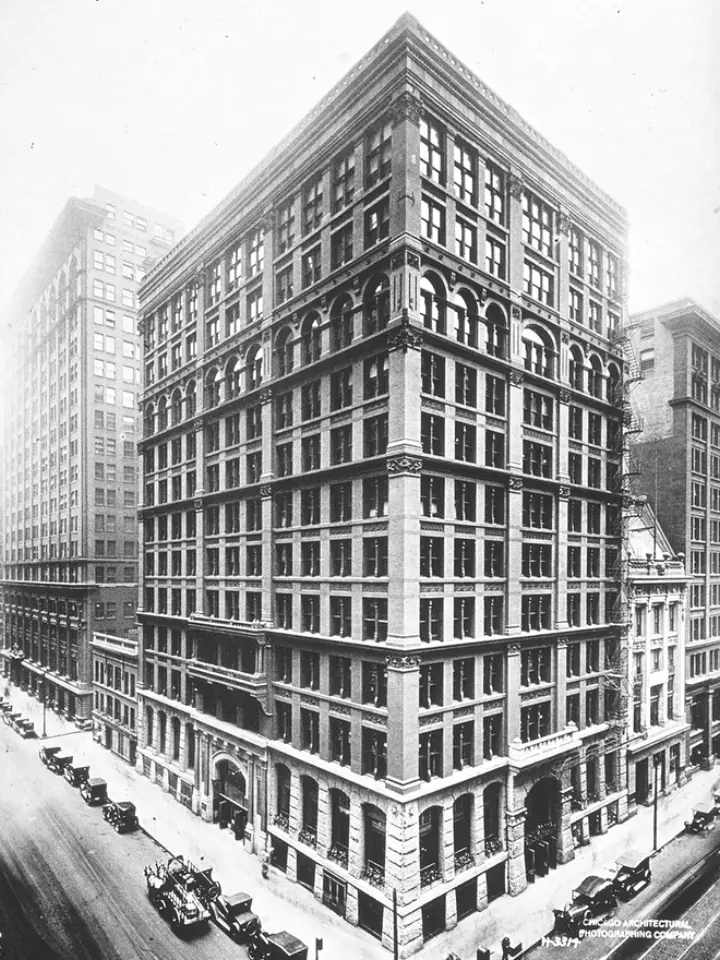
In 1884, architect William Le Baron Jenney designed a building that would change skylines forever. The Home Insurance Building in Chicago, completed in 1885, was the first tall building supported by a fireproof structural steel frame — both inside and out. That skeleton made it weigh one-third as much as a masonry building. City officials were so worried they halted construction to investigate its safety. Originally ten stories and 138 feet tall, two more floors were added in 1891, pushing it to 180 feet. It's often called the world's first skyscraper. But here's the twist: at the time, Chicago's press didn't call it that. An 1884 list of the city's 'skyscrapers' included three buildings taller than Jenney's — though they weren't yet finished. The Home Insurance Building was demolished in 1931 to make way for the Field Building. A plaque in the lobby of that new building calls it 'the true father of the skyscraper.'
The “Begin Historic Illinois U.S. Route 66” markers stand on Adams Street at Michigan Avenue, and the “End” markers on Jackson. The southwest corner of the Art Institute marks the original 1926 terminus.
Dedicated in 1927 in the center of Grant Park. In 1938 Route 66 was extended two blocks east through the park, past the fountain, to end at Lake Shore Drive.
The 1904 Santa Fe Building at 224 South Michigan Avenue. Its formal entrance is on Jackson Boulevard, and Daniel Burnham’s staff drew the 1909 Plan of Chicago in a penthouse on its roof.
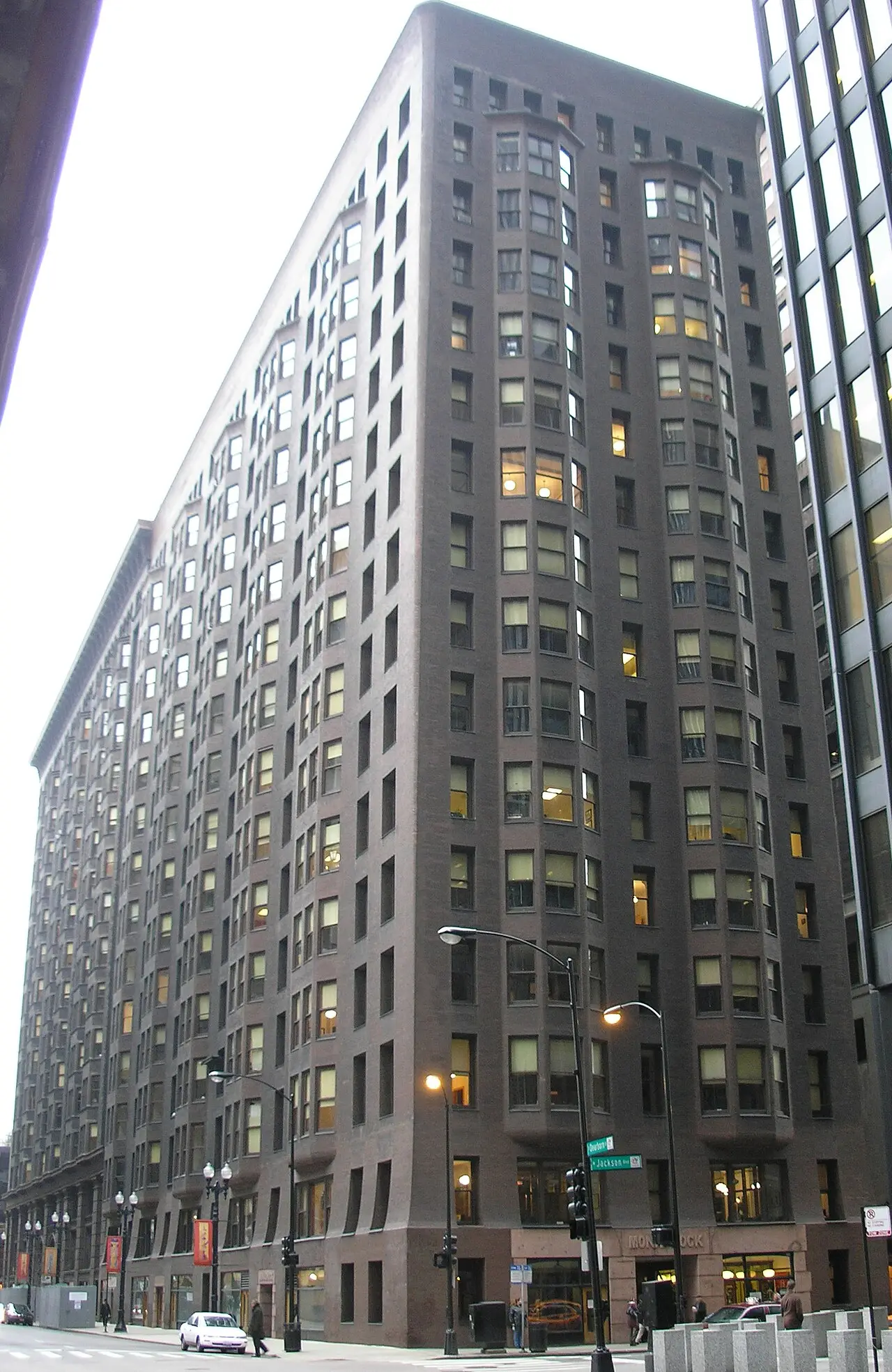
At 53 West Jackson Boulevard. Its north half, by Burnham & Root, is the tallest load-bearing brick or masonry building ever constructed; the 1893 south half is more ornate.
An 1895 Holabird & Roche office tower. Relief panels over the entrance show Jacques Marquette’s 1674–75 expedition, and a Tiffany mosaic frieze rings the lobby atrium.
A diner at 565 W. Jackson Boulevard near the start of Route 66, nicknamed “the first stop on the Mother Road.” The nationwide Route 66 restoration program was launched here in May 2002.
Chicago is about 0 miles from Chicago along the route.
Dell Rhea’s Chicken Basket 20 mi west
A roadhouse in Willowbrook that began as a lunch counter in a Route 66 gas station in the late 1920s. The present building opened in 1946; it and its neon sign are on the National Register.
Lorecast plays short stories about the places around you, hands-free. Download Route 66 before you leave and it works offline. Route 66 is free through December 31, 2027.
How these stories are made
Lorecast stories are written with AI using only the sources listed under each story, and they are narrated with synthetic voices. An automatic check traces every name and date back to those sources, and legends are told as legends. Every story on this page was also checked against its sources before we published it here. If you spot a mistake, write to hello@lorecast.net.