The first major city outside Chicago on Route 66, past a 1926 movie palace and the site of the first Dairy Queen.
40 mi from Chicago
4 stories to hear
Free in the app through 2027
Allow one cookie to recognise return visits? No cross-site tracking. Privacy
About Joliet
Joliet lies on both sides of the Des Plaines River, about 40 miles southwest of Chicago. It was one of the principal ports on the Illinois and Michigan Canal, and its local limestone built the Old Joliet Prison, completed in 1858.
Route 66 crosses the river on the Ruby Street Bridge. After a 1940 bypass, the old route through downtown became Alternate US 66, later split between northbound Scott Street and southbound Ottawa Street, both lined with historic buildings.
On the road, Lorecast plays these on its own as you drive past each place. Here you can listen first. Each story lists its sources.
HISTORY · TOLD BY MILES · 58 SEC
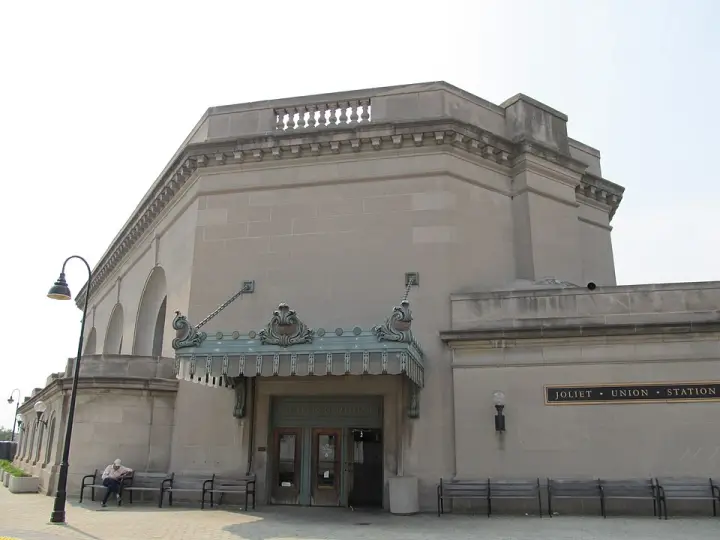
A station without trains
Imagine a building that once saw over a hundred trains a day, its platforms thick with travelers from across the country. This is Joliet Union Station, built in 1912 as part of a massive project to handle the six railroads that converged here, just outside Chicago. At its peak, it was a humming hub of intercity, commuter, and interurban service. But here's the twist: today, that grand Beaux-Arts station, listed on the National Register in 1978, no longer serves a single train. Amtrak and Metra pulled out in 2014, and by 2018 a new transportation center had taken over. The city of Joliet now owns the old station, and its waiting room has been transformed into a banquet hall. So the place that once moved thousands now hosts weddings and galas.
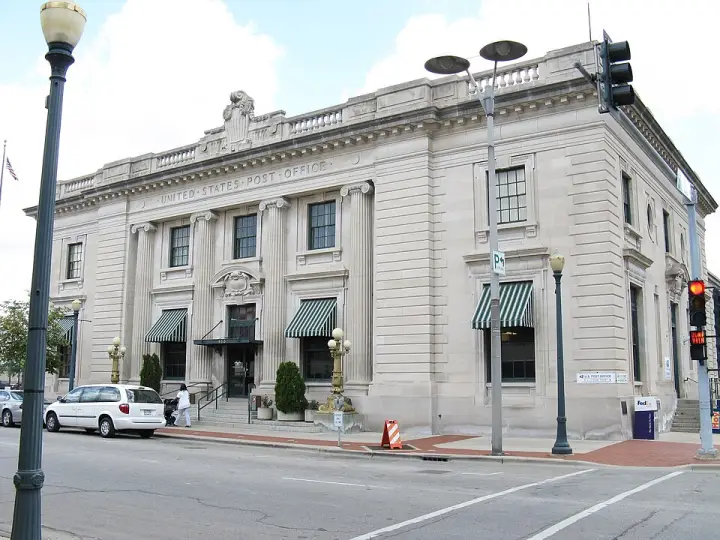
In 1899, Congress approved $100,000 to build a new post office in Joliet. The building, designed by James Knox Taylor, opened in 1903. It served the city for nearly 80 years. But here's the twist: Joliet grew so fast in the early 20th century that the post office quickly became too small. Congress had to approve another $185,000 for expansion—the last major change to the building. It operated as the post office until 1981, when a new one was built. Want to know more about the post office's history?
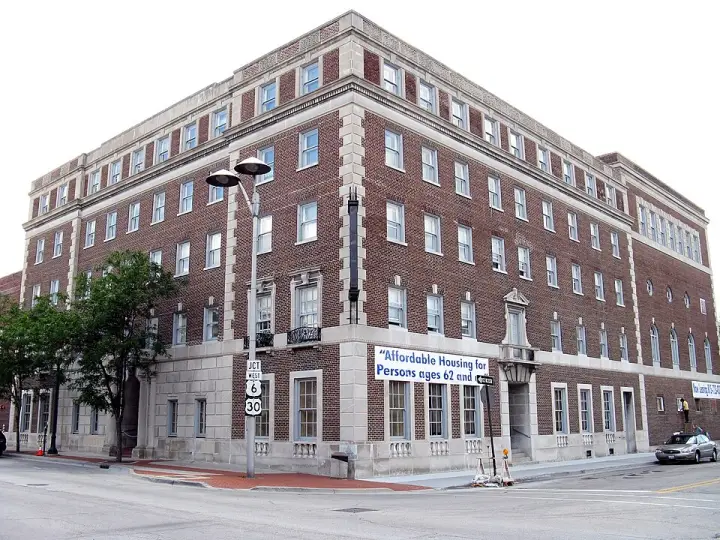
The Joliet YMCA started small. Its first building, on Clinton Street, struggled to stay afloat and closed in 1901, sold to cover debts. But in the 1920s, the Illinois YMCA tried again. Joliet was booming — the Roaring Twenties — and a fund-raising campaign raised $450,000 for a new building. $200,000 came from U.S. Steel. The seven-story building was designed by the Burnham brothers, sons of the famous Daniel Burnham. They never matched their father's fame, but they gave Joliet this sturdy landmark. It housed the Rotary Club, the Lions Club, the Boy Scouts. Women's access was limited at first; a Women's Division annex was proposed in 1933 but delayed by the Great Depression, finally added in 1950. The building still stands, listed on the National Register in 2006.
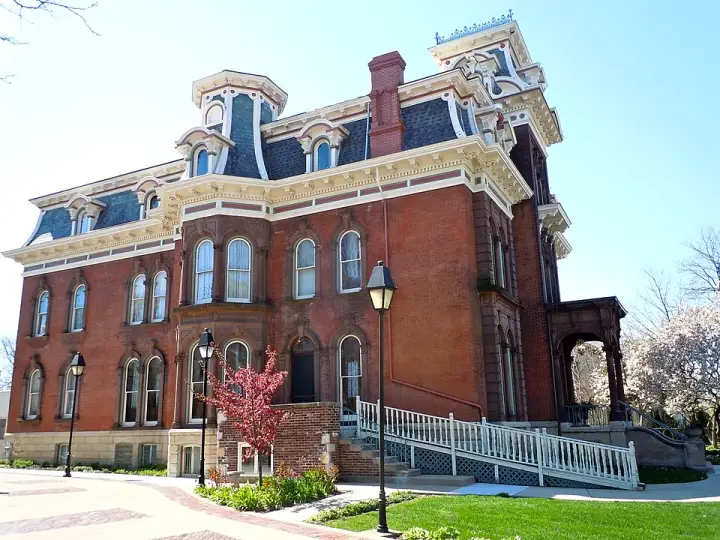
In 1876, a Joliet house took the architecture award at the American Centennial Celebration in Philadelphia. Not bad for a home built by a railroad magnate on a foundation of Joliet limestone from his own quarry, with red Illinois sandstone and deep red brick specially fired in Ohio and shipped by barge. Henry Mansion had a commanding three-story tower, elaborate polished-walnut woodwork, massive carved pocket doors, a solid walnut staircase. Then the Depression hit. By the 1930s, many Joliet residents couldn't afford the upkeep on these large residences. Henry Mansion became a boarding house. Later, a funeral parlor. During World War II, big Victorian homes were divided for multiple families. After the war, absentee landlords and vinyl siding slowly erased the old stone and brick character. In 1975, federal Block Grant money began offering incentives to restore historic structures, and in 1980 the East Side Historic District was established. The mansion still stands, a landmark now.
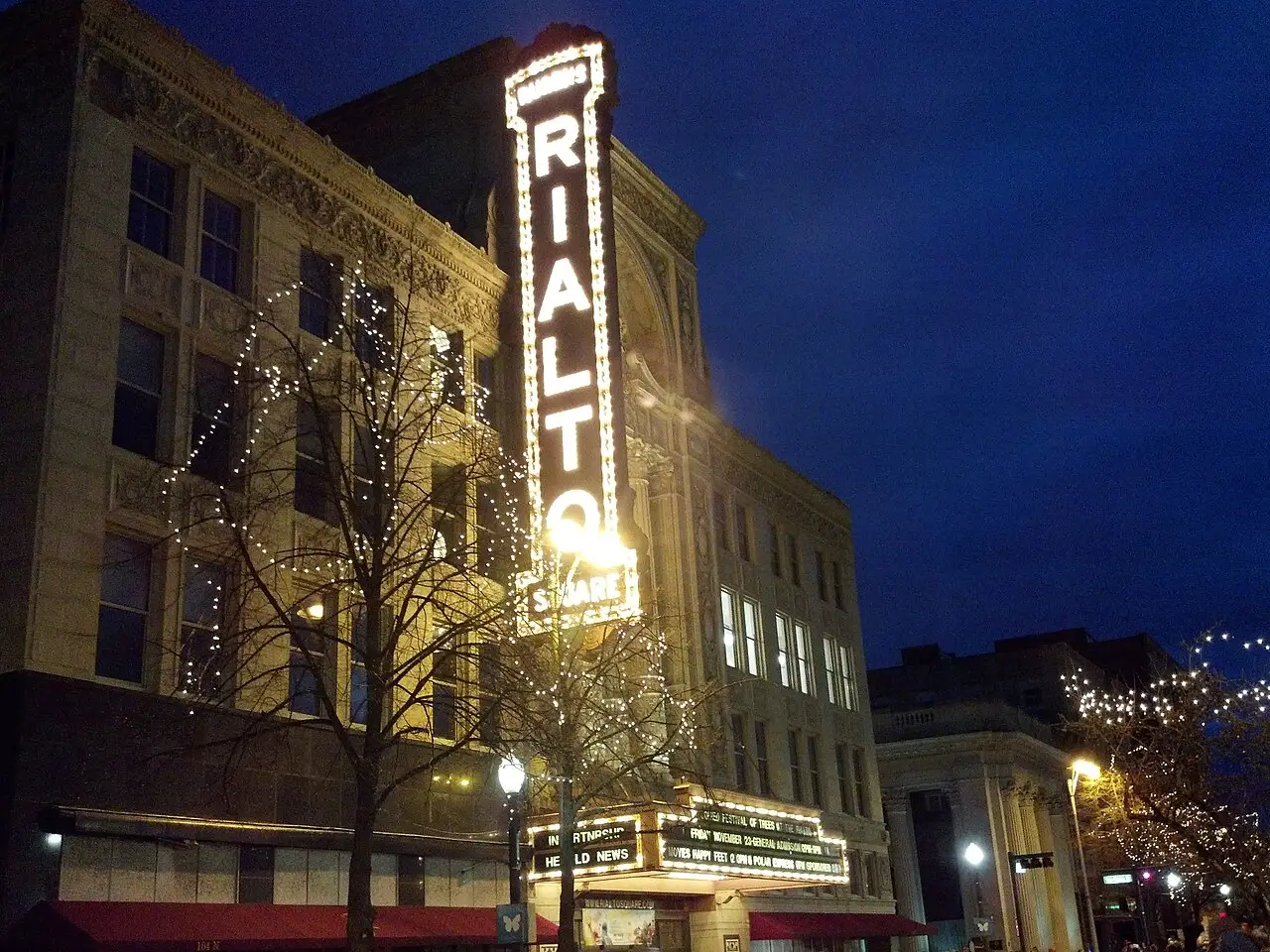
A Neo-Baroque vaudeville movie palace by C.W. and George Rapp that opened in 1926 on Chicago Street. Restored in the 1980s, it now hosts musicals, plays, concerts and comedy.
In the 1909 former Ottawa Street Methodist Church, on one of the alternate paths of Route 66. Its ground-floor addition holds the Route 66 Welcome Center and a permanent exhibit, the Route 66 Experience.
Jarvis Hunt’s 1912 Beaux-Arts station, which once served more than 100 trains a day. It closed to passengers in 2014; the restored upper waiting room is now a banquet hall.
Two landmarks on the old downtown route: the 1903 post office at 150 North Scott Street (northbound lanes) and, at 215 North Ottawa (southbound), the seven-story YMCA by the Burnham brothers.
Sherb Noble opened the first Dairy Queen at 501 N. Chicago Street on June 22, 1940. It closed in the early 1950s; the building is a local landmark and now houses a church.
A restaurant in Romeoville, opened in a converted farmhouse in the early 1920s. By the time Route 66 opened in November 1926, it had already served several thousand customers.
A fiberglass astronaut holding a rocket, a variation of the “Muffler Man” figures, that stood at the Launching Pad restaurant in Wilmington. Since November 29, 2024, it has stood at the entrance to South Island Park.
Lorecast plays short stories about the places around you, hands-free. Download Route 66 before you leave and it works offline. Route 66 is free through December 31, 2027.
How these stories are made
Lorecast stories are written with AI using only the sources listed under each story, and they are narrated with synthetic voices. An automatic check traces every name and date back to those sources, and legends are told as legends. Every story on this page was also checked against its sources before we published it here. If you spot a mistake, write to hello@lorecast.net.