The Illinois capital since 1839, where Lincoln lived for 24 years and Route 66 passed the Old State Capitol.
200 mi from Chicago
5 stories to hear
Free in the app through 2027
Allow one cookie to recognise return visits? No cross-site tracking. Privacy
About Springfield
Springfield has been the capital of Illinois since 1839, a choice owed largely to Abraham Lincoln and his associates, the “Long Nine.” Lincoln lived here from 1837 until 1861, when he became president.
Route 66 came in on Illinois Route 4, then left it to pass the Illinois State Capitol and the Old State Capitol, where the 1930 alternate route joined it. Heading north, it passed the State Fairgrounds and the Lazy A Motel.
On the road, Lorecast plays these on its own as you drive past each place. Here you can listen first. Each story lists its sources.
HISTORY · TOLD BY MILES · 91 SEC
The capitol rebuilt stone by stone
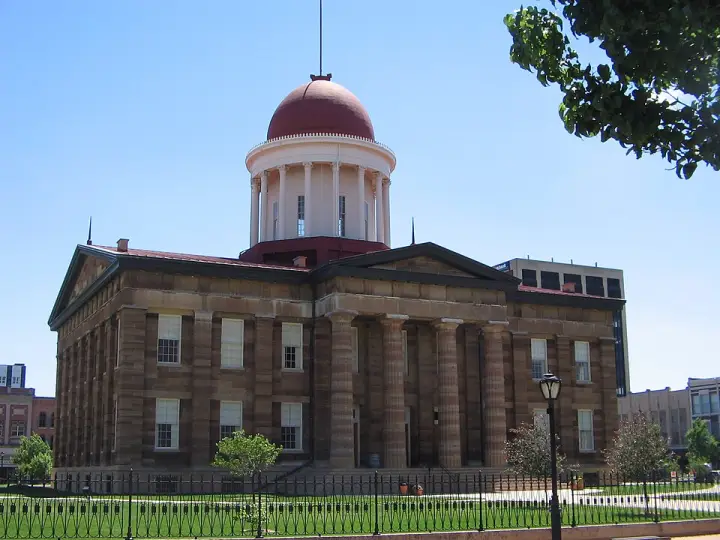
They took the whole building apart, stone by stone, and put it back together to look like a year: 1860. Springfield’s Old State Capitol was built in Greek Revival style between 1837 and 1840, and served as the state house from 1840 to 1876. Here Lincoln served his final term as a state lawmaker in 1840–41, pleaded cases before the Illinois Supreme Court from 1841 to 1860, and in June 1858 made his House Divided speech announcing his candidacy. In May 1865, his body was returned to that same chamber to lie in state. After 1876, the building became the Sangamon County courthouse and was heavily altered — in 1898–1899 the county raised the structure 11 feet, added a third floor, and reconfigured the interior. By the early 1960s, the Civil War centennial rekindled interest, the county built itself a new courthouse, and the old capitol was handed back to the state. To restore it, workers completely dismantled the building, stone by stone, and rebuilt the public areas to resemble how it looked in 1860 — the last time Lincoln saw the capitol before leaving for Washington. The reconstruction was carried out in 1966–1969.
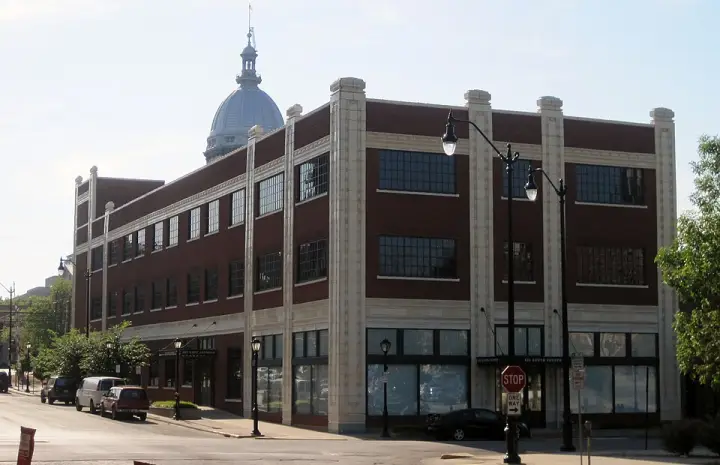
In 1919, Frank Jennings built a Ford dealership at 431 South 4th Street in Springfield. The automobile had taken over the city in the 1910s, and this stretch of South 4th was the place to be — Springfield's automobile row. Jennings didn't just sell cars; his three-story building packed in everything: a sales floor, service center, car wash, storage garage, and even a repainting facility. It was a one-stop shop for the new motoring age. The dealership itself closed between 1927 and 1933, but the building kept selling cars through the 1950s. Today, it houses an operations center for Illinois National Bank. It's one of the few surviving dealership buildings downtown, and the best-preserved of the bunch.
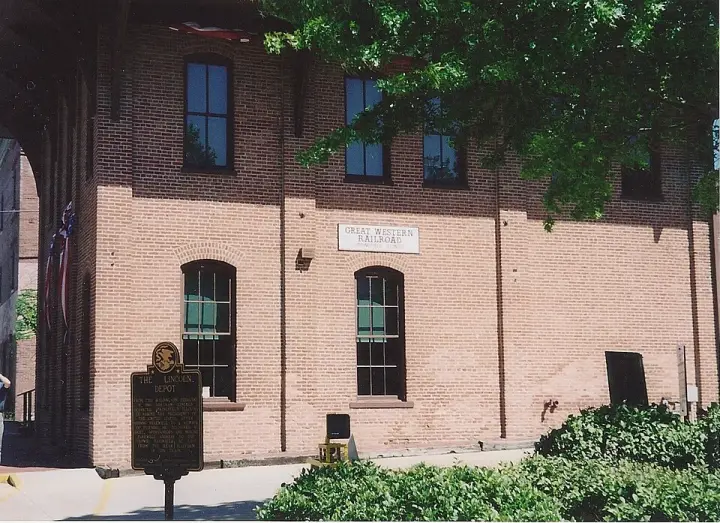
They say a single request can change the course of history. On a dark, gloomy morning in 1861, as Abraham Lincoln prepared to board a train at this depot for Washington D.C., he left his fellow Springfield citizens with one simple plea: "Pray for me." It’s a heavy thing to carry, isn't it? The idea that a nation's leader was sustained by the prayers of those gathered on that platform. There is a story told—recalled by his Washington D.C. pastor during Lincoln's funeral in 1865—that these prayers were not in vain. The legend goes that the answer to that plea shone through his entire administration, providing a sort of heavenly radiance during his mission for a troubled nation. You can still see the weight of that moment marked right here at the station. On February 11, 1861, Lincoln delivered an impromptu and emotional farewell address from the rear platform of his train to a crowd estimated at 1,000 people. His friends and neighbors filed past him in the office, taking his hand before he departed. It’s a place that has seen its share of shadows, too. In December 1968, a fire severely damaged the building, and some even suspected arson, though no one could ever prove it. But despite the flames and the changing hands of owners, parts of the structure from Lincoln's own time survived.
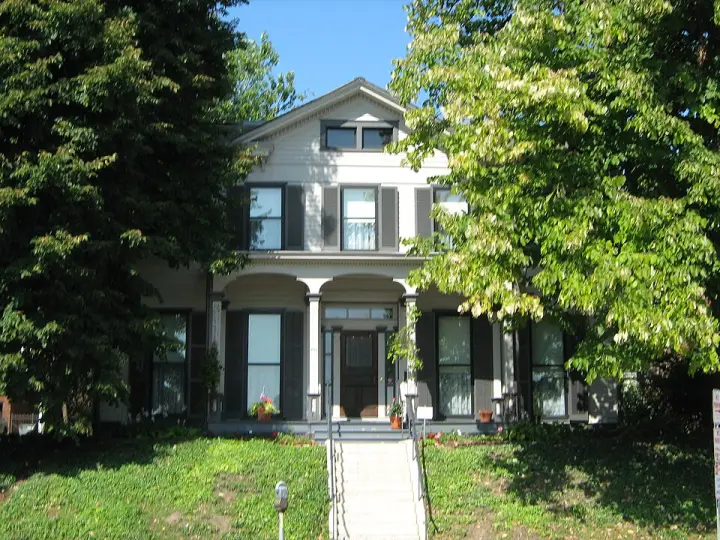
This house at 603 South 5th Street was built in 1848, but its real story begins in 1879, when a poet named Vachel Lindsay was born here. He lived here his whole life. Lindsay wanted to be an artist, but discovered a talent for poetry. His first volume came out in 1913, and in 1914 he published 'The Congo' — it made him famous. His style was unusual: he used everyday language and chanted his poems in a sing-song way at public readings. The house is now a museum, decorated in late Victorian style. You can see the bed where he was born, a desk he built, and the table where he wrote. Want to know more about Vachel Lindsay's life and work?
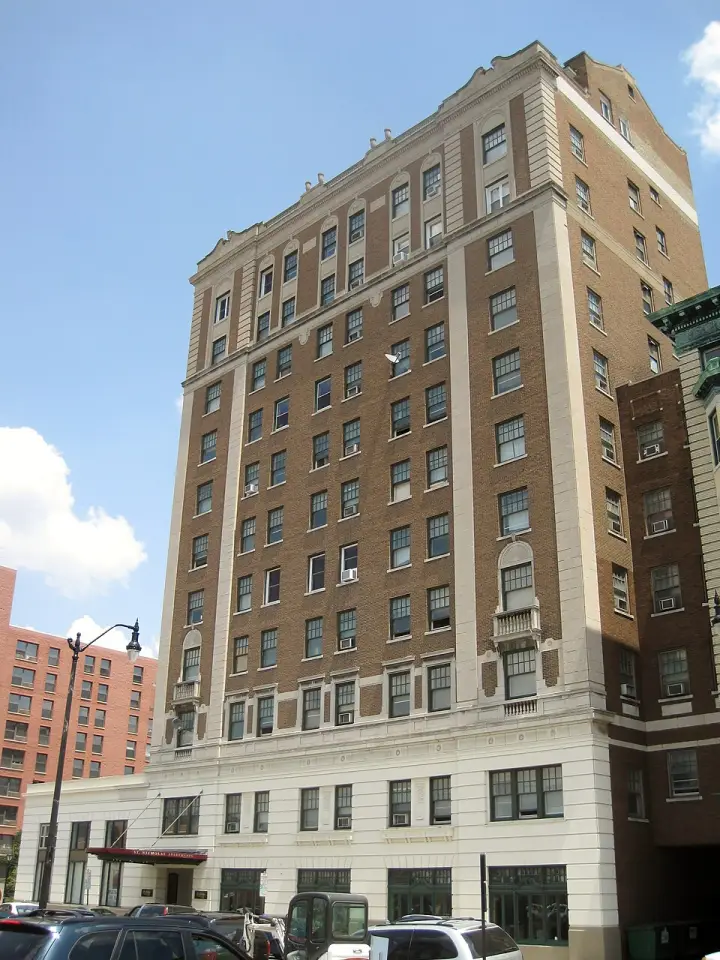
What makes a man stash $750,000 in shoeboxes in a hotel room? At the St. Nicholas Hotel in Springfield, that question followed Powell, Illinois Secretary of State, to room 546. When he died in 1970, the executor of his will found the cash—$6.22 million in today's money—in shoeboxes, briefcases, and strongboxes. Powell's salary was at most $30,000 a year, so a federal investigation dug in and found illegal cash bribes; it put several state contractors in prison. The Georgian Revival building, opened in 1924 and once second-tallest in Springfield after the State Capitol, was already the spot where politicians conducted business during legislative sessions. It's no longer a hotel—now apartments—and the only Springfield hotel left from the 1920s or earlier. It joined the National Register of Historic Places in 1983.
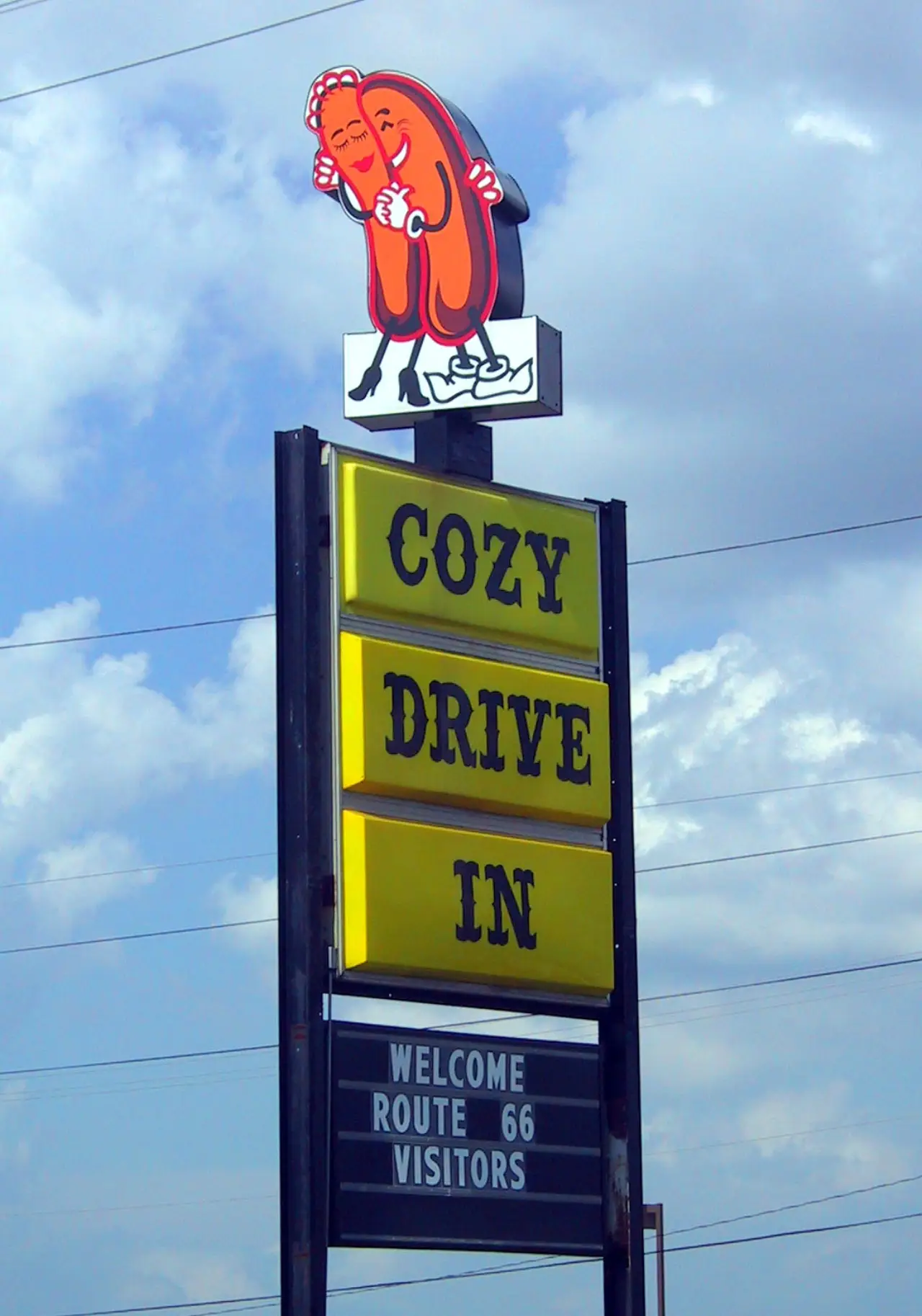
A Route 66 stop at 2935 South Sixth Street, with Route 66 memorabilia and a gift shop. Ed and Virginia Waldmire named their cornmeal-battered hot dog the “Cozy Dog” and began selling it in 1946.
The 1837–40 Greek Revival capitol where Lincoln gave his House Divided speech in 1858, rebuilt in 1966–69 to look as it did in 1860. Route 66 passed it on its way through town.
The Great Western Railroad’s 1852 depot, where Lincoln gave his farewell address to Springfield in 1861. Its first floor has reopened as a tourist site, run with the Lincoln Home National Historic Site.
A 1919 Ford dealership at 431 South 4th Street, then Springfield’s automobile row. It is the best-preserved of the few dealership buildings left downtown.
A grove on Route 66 southwest of Bloomington, settled by the Funk family in 1824, where pure “maple sirup” is made. The family began selling it commercially in 1891.
Surviving pieces of the alternate route opened in 1930. Other sections were destroyed in the 1930s when Lake Springfield was created; the fragments were added to the National Register in 2009.
Let Springfield tell its own stories as you drive in.
Lorecast plays short stories about the places around you, hands-free. Download Route 66 before you leave and it works offline. Route 66 is free through December 31, 2027.
How these stories are made
Lorecast stories are written with AI using only the sources listed under each story, and they are narrated with synthetic voices. An automatic check traces every name and date back to those sources, and legends are told as legends. Every story on this page was also checked against its sources before we published it here. If you spot a mistake, write to hello@lorecast.net.