The only major city on Route 66 in Texas, where four U.S. highways met and made it a major tourist stop.
1,090 mi from Chicago
5 stories to hear
Free in the app through 2027
Allow one cookie to recognise return visits? No cross-site tracking. Privacy
About Amarillo
Amarillo began in 1887 as a townsite on the Fort Worth and Denver City Railway. First called Oneida, it took the Spanish word for yellow as its name, and by the late 1890s it was one of the world’s busiest cattle-shipping points.
U.S. Routes 60, 87, 287 and 66 met here, and motels, restaurants and curio shops followed; by 1953 the city had 68 Route 66 lodgings. West of downtown the old highway is still called West Sixth Street, and part of it is now a historic district.
On the road, Lorecast plays these on its own as you drive past each place. Here you can listen first. Each story lists its sources.
HISTORY · TOLD BY MILES · 71 SEC
Ten Cadillacs, nose-first
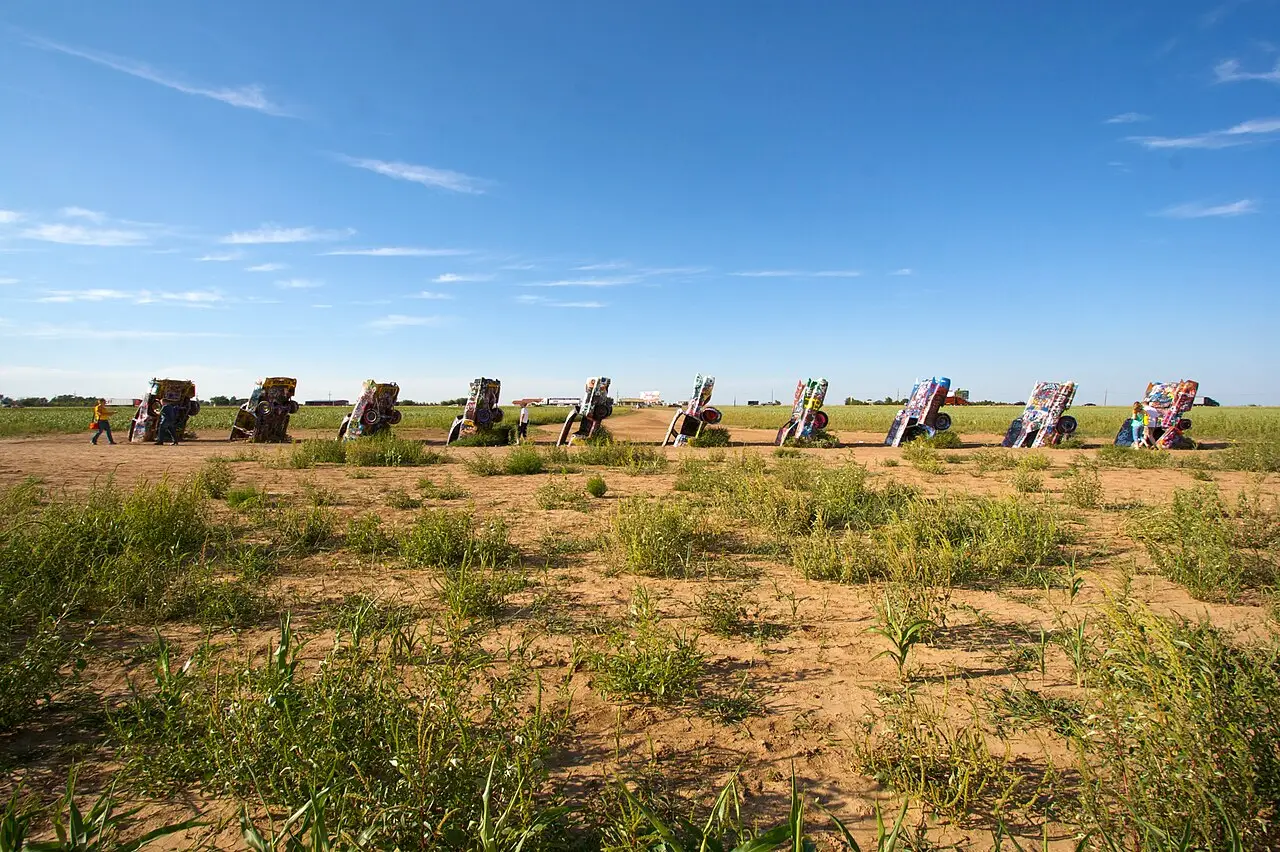
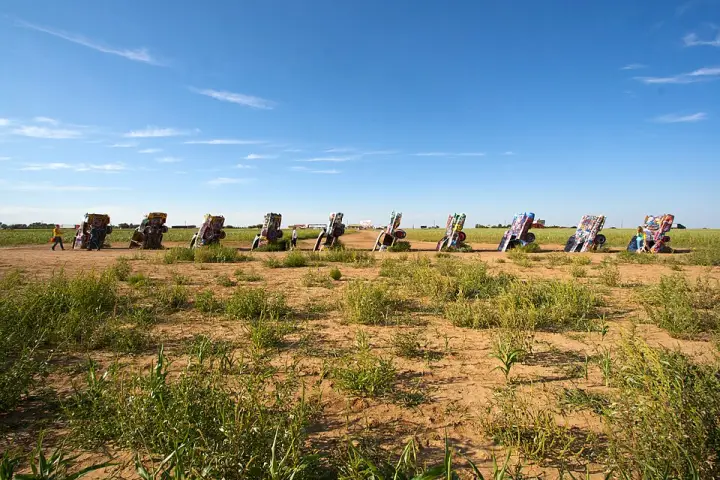
In 1974, a group of architects and artists called Ant Farm buried ten Cadillacs nose-first in a Texas wheat field. The cars, spanning 1949 to 1963, trace the rise and fall of the tail fin—inspired by a kids' book one of them found in a bar. They pitched the idea to eccentric millionaire Stanley Marsh 3, who called it 'an irrelevant and silly proposition'—and funded it anyway. The cars are angled at the same tilt as the pyramids of Giza. Originally in a wheat field, the whole thing was moved two miles west in 1997 to a cow pasture along Interstate 40. Visitors are tacitly encouraged to walk through an unlocked gate and spray-paint the cars—the artists wanted that. The cars get repainted constantly: white for a commercial, pink for Marsh's wife's birthday, black for an artist's death, rainbow for Pride. In 2024, for the 50th anniversary, co-founder Chip Lord led a repaint in gray primer as a 'reset.' Want to know more about the Ant Farm collective?
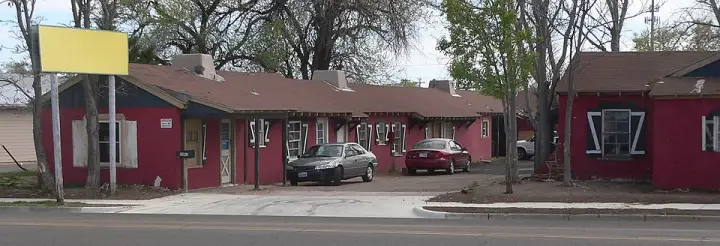
The Ranchotel in Amarillo, Texas, was completed in 1940. It was a motel popular with travelers using the historic U.S. highway system. The building was added to the National Register of Historic Places on April 14, 1995. That's the story in a nutshell—a roadside stop that earned its place in history.
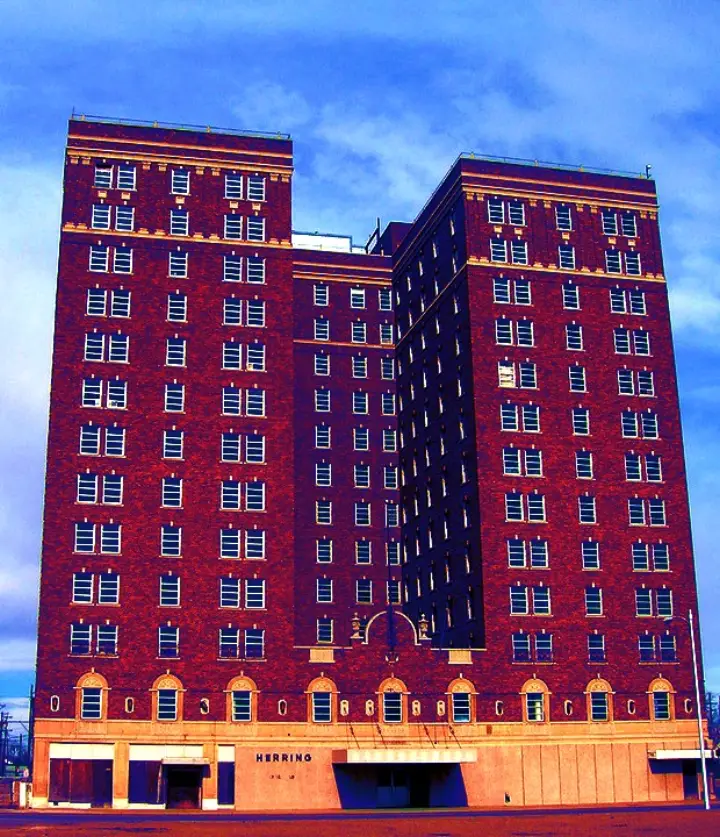
A hotel that's been empty since 1978 — and they're planning to reopen it as a luxury hotel in 2029. That's the Herring Hotel. It opened in 1926, named after Cornelius Taylor Herring, who built it. Then in 1966 it closed and became a government office. By 1978 it was vacant. Now, after nearly fifty years of silence, someone's betting big on its comeback.
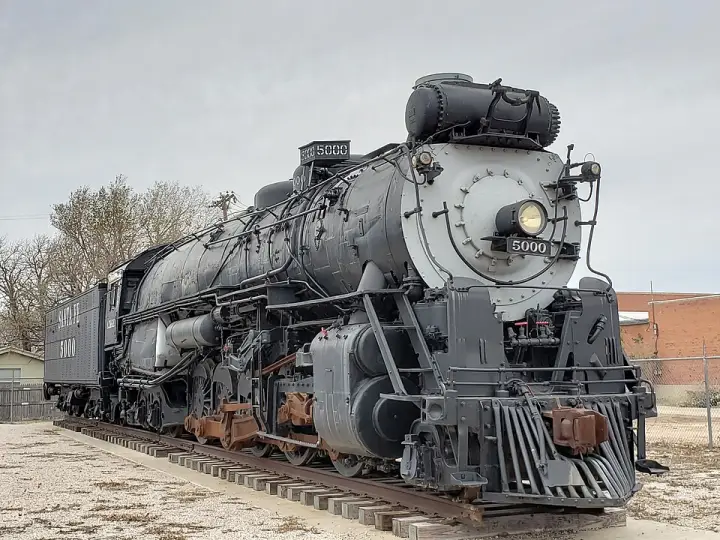
In 1930, the Baldwin Locomotive Works built a 2-10-4 'Texas' type steam locomotive for the Atchison, Topeka and Santa Fe Railway. They numbered it 5000 and immediately nicknamed it the 'Madame Queen.' It was a unique machine—the Santa Fe's only locomotive of its class. The Texas type is essentially a Berkshire with an extra driving axle, designed for heavy freight. The Madame Queen served for decades, then was donated to the city of Amarillo, Texas in 1957. As of 2023, the Railroad Artifact Preservation Society maintains it, and it's listed on the National Register of Historic Places.
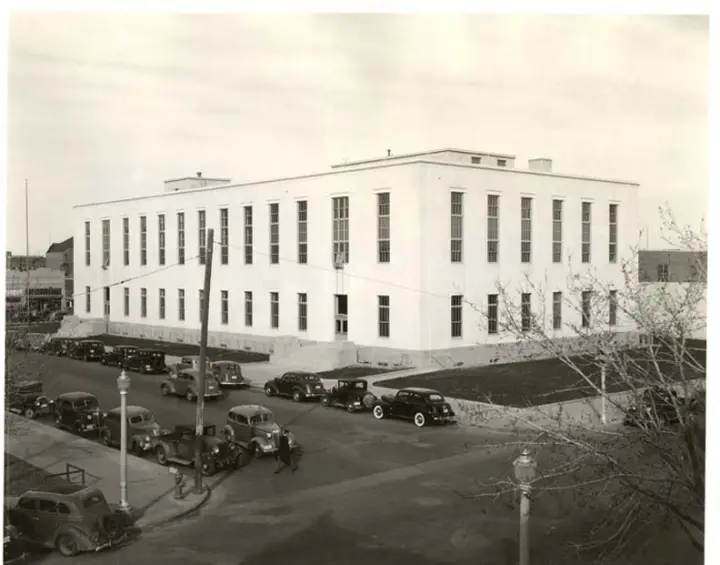
In 1937, a building went up in downtown Amarillo that was meant to say something about America. It was a post office and courthouse, designed by Texas architect Wyatt C. Hedrick, with murals by Julius Woeltz of New Orleans. But here's the thing: the style it chose—a mix of Art Deco and Moderne—was part of a short-lived movement called the American Renaissance. It tried to borrow from Renaissance Italy to celebrate American themes. And then it just… stopped. No distinctive path. The building itself has been altered over the years—air conditioning, renovations, parking lots swallowing the green space. But the main lobby and the district courtroom still hold echoes of that original idea.
Ten Cadillacs from 1949 to 1963, buried nose-first in 1974 by the art group Ant Farm and moved to this cow pasture along Interstate 40 in 1997. Visitors walk in through an unlocked gate, and spray-painting the cars is encouraged.
Old Route 66 through the San Jacinto Heights neighborhood, known locally as West Sixth Street. Listed in 1994, the district includes the Amarillo Natatorium and about a dozen buildings: homes, service stations, a fire hall and a church.
A 1940 tourist court designed to resemble a Texas ranch and popular with Route 66 travelers. By 1953 it was one of 68 Route 66 lodgings in Amarillo. The building still stands.
A steakhouse and motel that opened on Route 66 in 1960 and moved to an Interstate 40 frontage road in 1970. A large bull statue advertises its “free” 72-ounce steak eating challenge.
One of the oldest buildings downtown, completed in 1926. The hotel closed in 1966 and the building has been vacant since 1978; in 2025 plans were announced to reopen it as a luxury hotel in 2029.
Built in 1937–38 as the U.S. Post Office and Courthouse, across East Fifth Avenue from Courthouse Square. Aluminum eagles perch above its entrances, and Julius Woeltz painted the murals in the main lobby.
A leaning water tower, moved here by Ralph Britten as a sign for his truck stop on a stretch of I-40 that was once Route 66; the truck stop burned years ago. A 190-foot cross stands beside I-40 outside town.
The Oldham County seat, about 30 miles west of Amarillo. Route 66 ran through Vega along the old Ozark Trail from 1926, and the 1947 Vega Motel still operates as a historic motel.
Let Amarillo tell its own stories as you drive in.
Lorecast plays short stories about the places around you, hands-free. Download Route 66 before you leave and it works offline. Route 66 is free through December 31, 2027.
How these stories are made
Lorecast stories are written with AI using only the sources listed under each story, and they are narrated with synthetic voices. An automatic check traces every name and date back to those sources, and legends are told as legends. Every story on this page was also checked against its sources before we published it here. If you spot a mistake, write to hello@lorecast.net.