The largest city on the highway between Amarillo and Albuquerque, and the one the billboards tell you to sleep in.
1,200 mi from Chicago
4 stories to hear
Free in the app through 2027
Allow one cookie to recognise return visits? No cross-site tracking. Privacy
About Tucumcari
Tucumcari began in 1901 as a construction camp on the Chicago, Rock Island and Pacific Railroad. The camp was called Ragtown, then “Six Shooter Siding” for its gunfights, and in 1908 it took the name of nearby Tucumcari Mountain.
Old Route 66 still runs through the heart of town as Route 66 Boulevard. Many of the motels and restaurants built there in the 1930s, ’40s and ’50s are still in business, and billboards reading “TUCUMCARI TONITE!” still invite drivers on Interstate 40 to stay the night. The town is also home to more than 50 murals, most of them painted by Doug and Sharon Quarles.
On the road, Lorecast plays these on its own as you drive past each place. Here you can listen first. Each story lists its sources.
LEGEND · TOLD BY MILES · 34 SEC
How Tucumcari got its name
They say the name Tucumcari comes from a Comanche word meaning "ambush" — tʉkamʉkarʉ. But there's another story, a folk etymology, that tells it differently. According to that tale, a Comanche saw a brakeman carrying a lantern and exclaimed "tukaʔ manoori!" — "carry the light!" — which the brakeman heard as "tukama carry." And that, locals say, is how the town got its name. Now, I can't swear to either version, but the story itself has a kind of poetry, doesn't it? A misunderstanding on the rails that stuck.
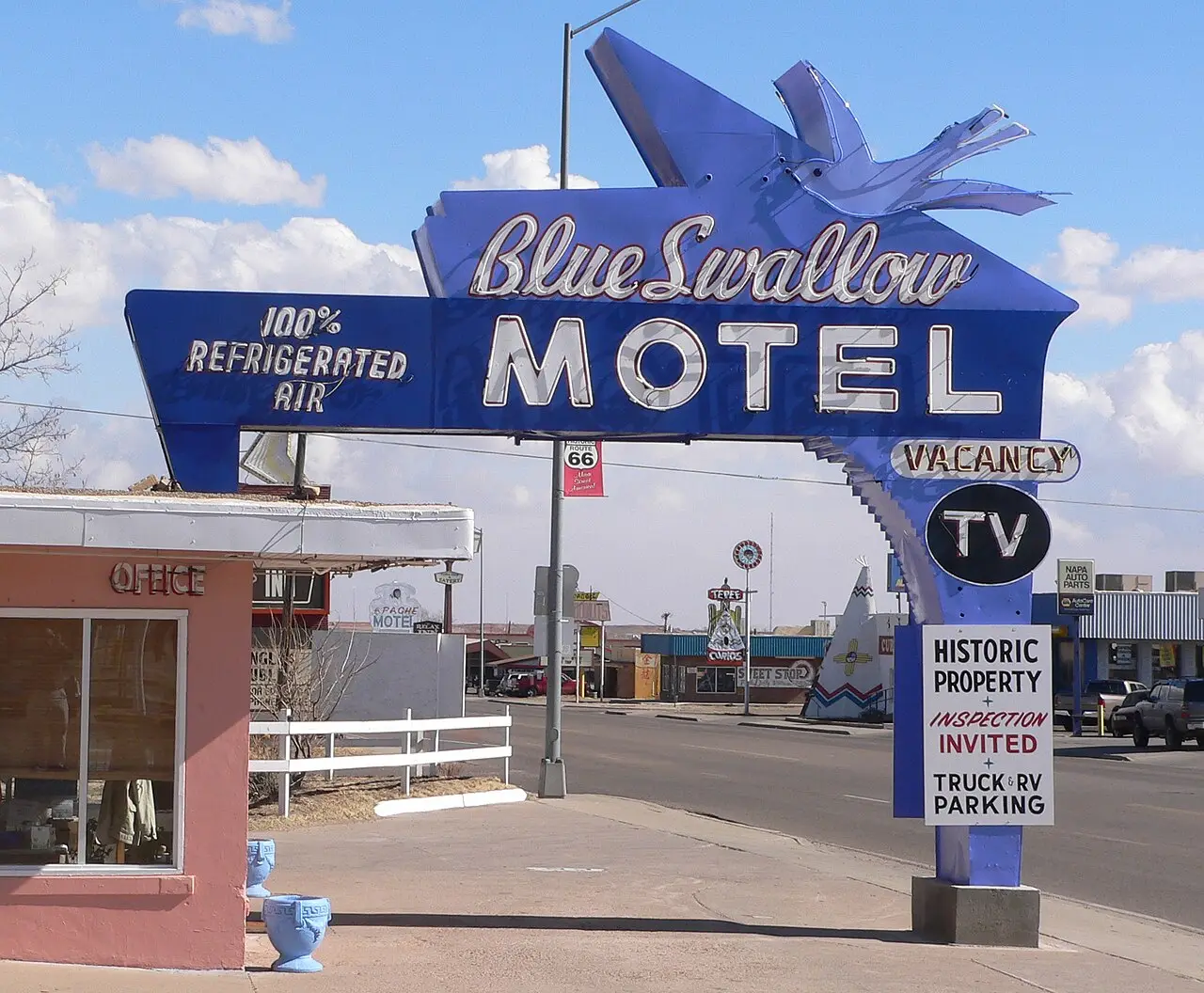
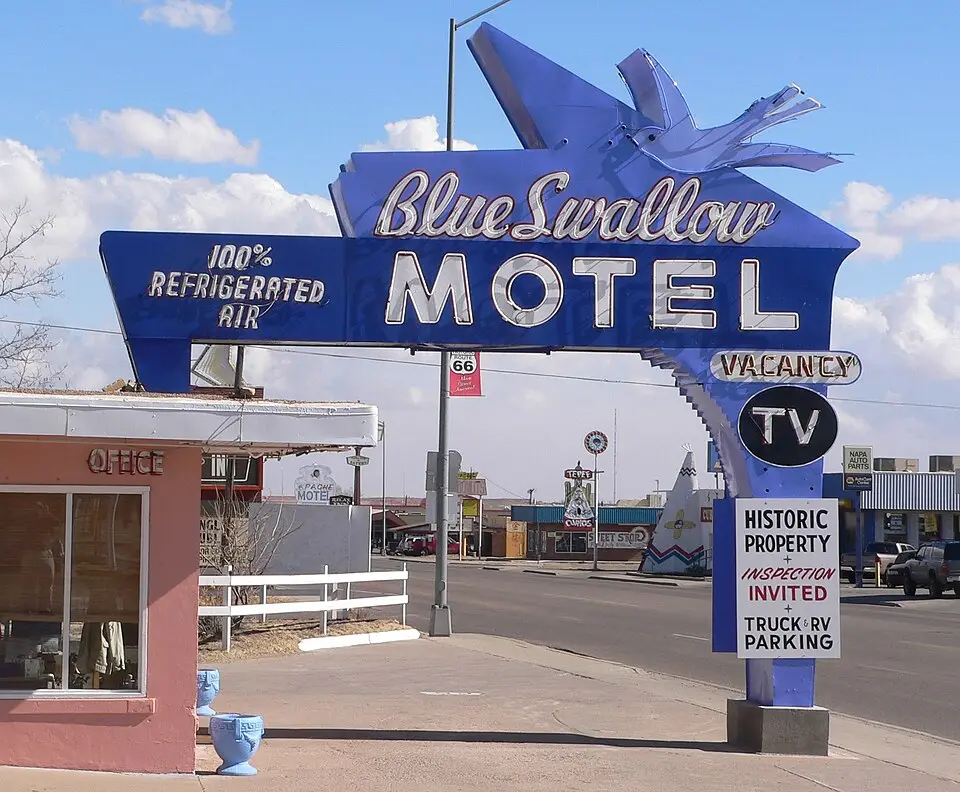
You know that Cozy Cone Motel from Pixar's Cars? The one where the cones are the rooms? Well, its neon sign borrowed a slogan from this very place: '100% Refrigerated Air.' But here's the twist—the Blue Swallow Motel wasn't just a roadside stop. It was an engagement present. In 1958, Floyd Redman bought it for his wife Lillian. She ran it for four decades, even after Floyd died in 1973. When Route 66 traffic dried up and Interstate 40 took over, she said, 'I felt just like I had lost an old friend. But some of us stuck it out.' She sold in 1998, moved to a small house nearby, and kept visiting until she died at 89. The motel's still here, still open, still friendly.
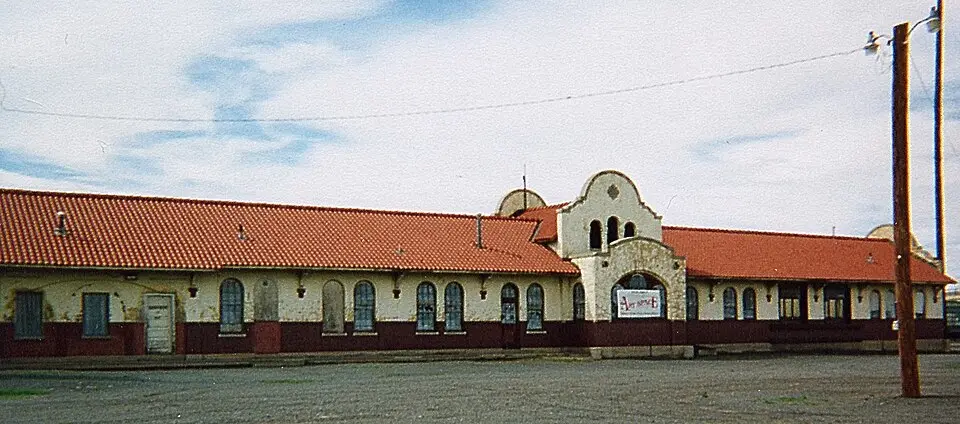
In 1901, this spot was called Ragtown — a construction camp for the Chicago, Rock Island and Pacific Railroad. The name says it all: rough, temporary, thrown together. But by 1926, Ragtown had become Tucumcari, and the railroad built something permanent: this station. It wasn't just a stop. It was a division point, a transfer stop where two railroads — the Rock Island and the Southern Pacific — joined their transcontinental services. Passengers changed trains here, freight was sorted, crews swapped out. For decades, the Golden State Limited and other trains rolled through, carrying people coast to coast. Then, in 1968, the last trains were discontinued. The station sat quiet. But it didn't die. Today, the Tucumcari Railroad Museum fills the building — not with ghosts, but with the real stuff of railroading.
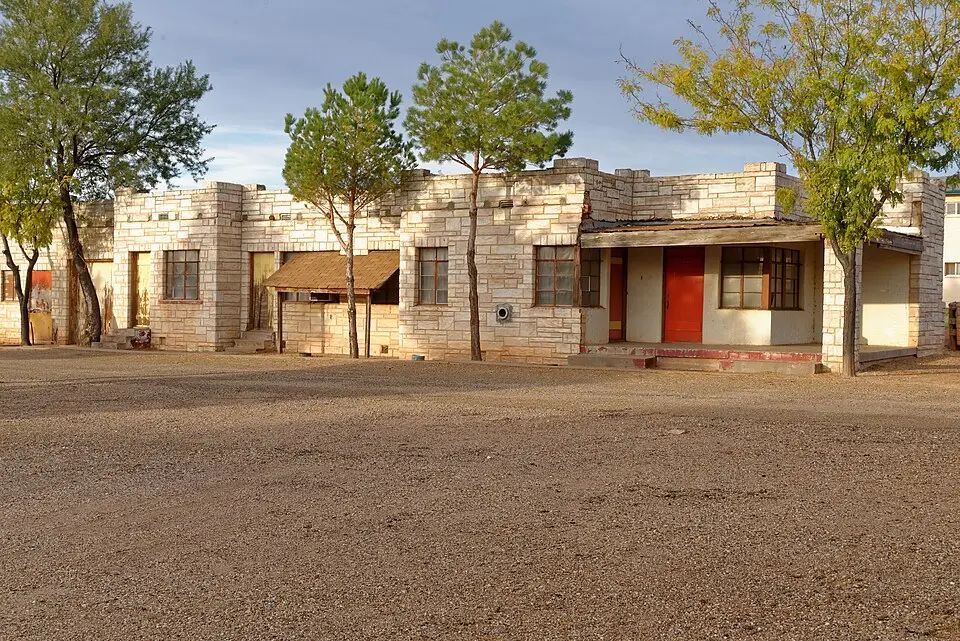
You might think the Cactus Motor Lodge was always a motel. But when it opened along historic U.S. Route 66 in Tucumcari, New Mexico, the office was actually a dance hall. In 1952, Norm Wegner bought the place and added an artificial stone exterior, turning the dance hall into a proper office. The motel had three wings of units in a U-shape. After Route 66 was decommissioned, business dried up. By the 1990s, it became an RV park, and the motel units fell into disuse. The neon sign was restored in 2008, but in October 2018 it was sold and moved to an Albuquerque neon-sign park. Other items were sold off, and then the property itself was sold to O'Reilly Auto Parts, which razed everything to build a store. The motel had been listed on the National Register of Historic Places in 2006, but that didn't save it.
A 12-unit motel from 1939–41 with pink stucco, garages between the rooms and the neon swallow. It is one of the longest continuously operated motels on New Mexico’s Route 66.
A ghost town on the Texas–New Mexico line, bypassed by Interstate 40 in 1973. At one point all fuel was sold on the Texas side, because New Mexico’s gasoline tax was higher, while the State Line Bar stood on the New Mexico side, because Deaf Smith County, Texas, was dry.
Let Tucumcari tell its own stories as you drive in.
Lorecast plays short stories about the places around you, hands-free. Download Route 66 before you leave and it works offline. Route 66 is free through December 31, 2027.
How these stories are made
Lorecast stories are written with AI using only the sources listed under each story, and they are narrated with synthetic voices. An automatic check traces every name and date back to those sources, and legends are told as legends. Every story on this page was also checked against its sources before we published it here. If you spot a mistake, write to hello@lorecast.net.