Route 66 is still Flagstaff’s main road, and the Santa Fe depot that opened beside it in 1926 is still the Amtrak station.
1,730 mi from Chicago
4 stories to hear
Free in the app through 2027
Allow one cookie to recognise return visits? No cross-site tracking. Privacy
About Flagstaff
Flagstaff is named for a flagstaff made from a stripped pine tree; the common story says it was raised for the nation’s centennial on July 4, 1876. The Atlantic and Pacific Railroad came through in 1882, and lumber, railroads and ranching built the early town.
Route 66 arrived in 1926, backed by the Babbitt and Riordan families. That year the Santa Fe opened a new depot, Front Street was renamed Santa Fe Avenue, and townspeople funded the Hotel Monte Vista, which opened on January 1, 1927.
On the road, Lorecast plays these on its own as you drive past each place. Here you can listen first. Each story lists its sources.
HISTORY · TOLD BY MILES · 51 SEC
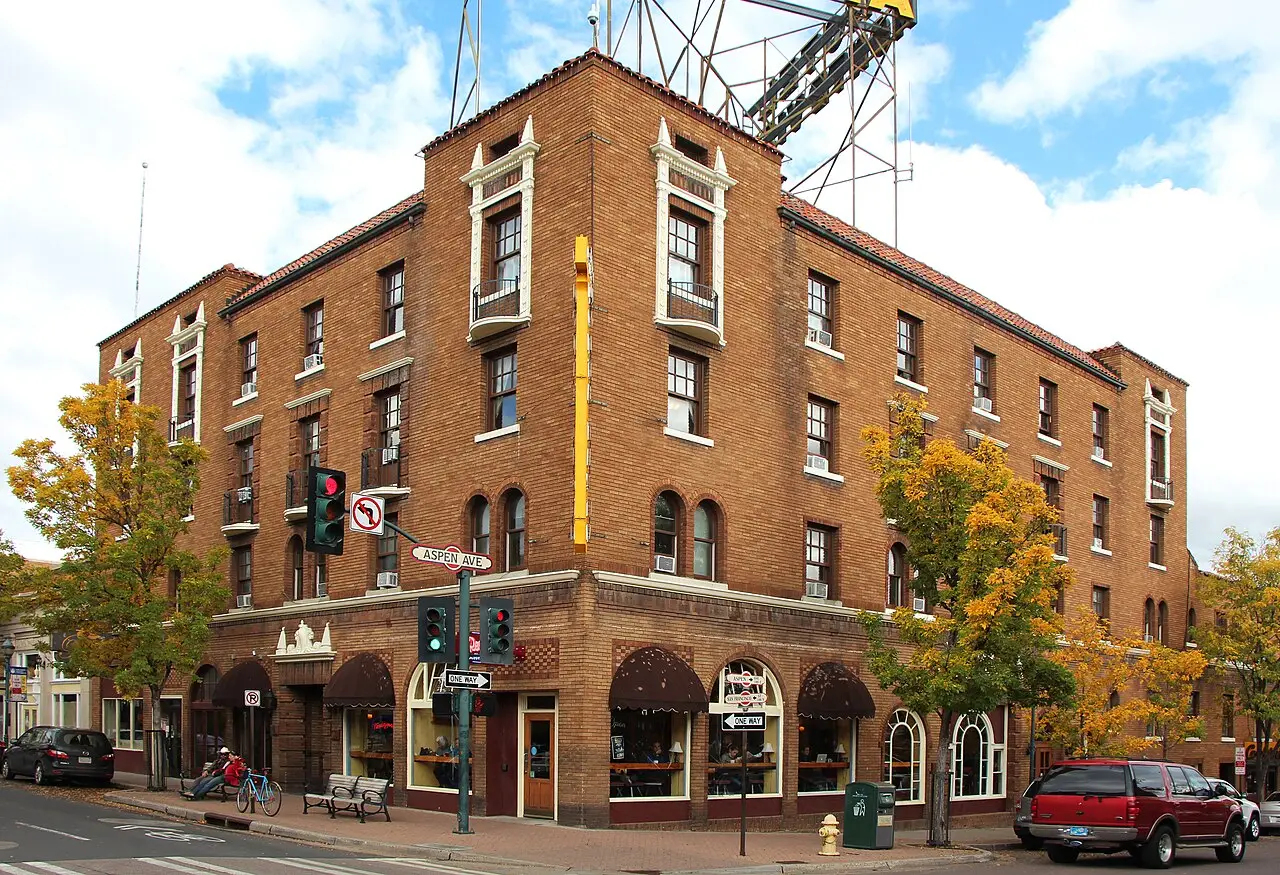
Hotel Monte Vista
Hotel Monte Vista has been a fixture of Flagstaff's historic downtown since 1927. It’s a place where the golden age of cinema once drifted through the halls, with stars like John Wayne, Humphrey Bogart, Clark Gable, and Spencer Tracy all checking in at some point. You can still find the Monte V lounge—or just 'Monte V' as people call it—serving as a spot for entertainment right here in the district. The building itself holds 73 rooms and suites spread across three floors.
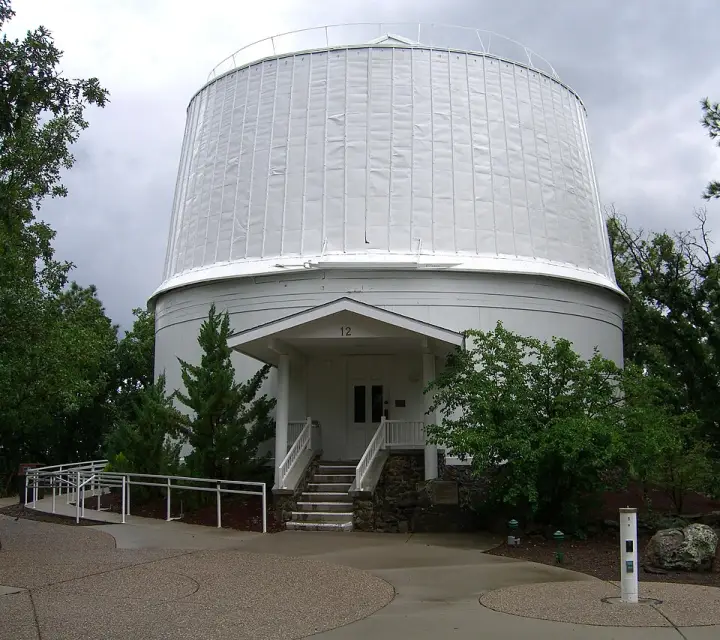
Lowell Observatory was established in 1894, placing it among the oldest observatories in the United States. It was here, in 1930, that Clyde Tombaugh discovered the dwarf planet Pluto. The observatory is home to a 24-inch Clark Refracting Telescope, built in 1896, which is still used for public observing today. Designated a National Historic Landmark in 1965, Lowell sees over 150,000 annual visitors and remains active in exoplanet and minor planet research.
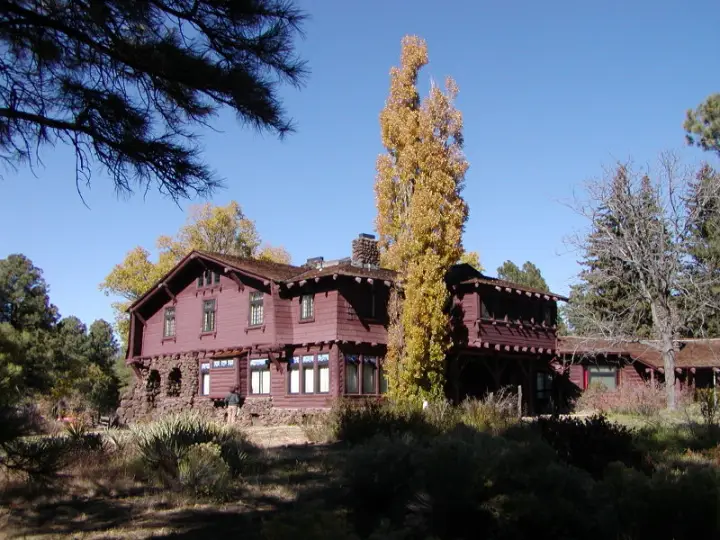
In 1904, while Arizona was still a territory, two brothers built a thirteen-thousand-square-foot mansion. But here's the twist: Timothy and Michael Riordan, lumber barons, married sisters—Caroline and Elizabeth Metz. So they built a duplex: two six-thousand-square-foot wings connected by a grand common room. The architect, Charles Whittlesey, designed it as one home for two families. The Riordans weren't just lumbermen—they shaped Flagstaff through railroads, cattle, banking, and politics. Today, it's a state historic park, a monument to a family that built an empire before statehood.
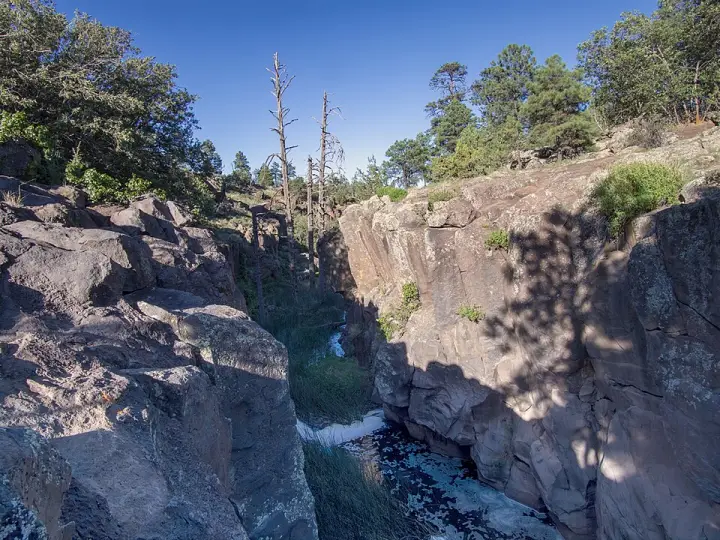
Imagine a place that took decades of community grit to save—and it's right here. Picture Canyon Natural and Cultural Preserve, 478 acres, was purchased at a public auction on the steps of the Coconino County Courthouse on October 30, 2012, for $4.8 million. The City of Flagstaff bought it after local groups spent years rehabilitating the area and rallying for its protection. It had already been listed on the National Register of Historic Places on January 10, 2008. Today, reclaimed water from the nearby Wildcat Hill Wastewater Treatment Plant feeds a pond that flows through a rugged basalt canyon into the Rio de Flag—a quiet victory of persistence over neglect.
The Santa Fe opened this depot in January 1926. It is still Flagstaff’s Amtrak station and shares the building with the visitor center. Across San Francisco Street stands the red sandstone 1889 depot it replaced.
Flagstaff residents funded this hotel, which opened on January 1, 1927, as the town prepared for a tourism boom. John Wayne, Humphrey Bogart and Barbara Stanwyck are among its past guests.
One block north of Route 66. Its brick hotel addition opened on New Year’s Day 1900; Zane Grey wrote “The Call of the Canyon” in its third-floor ballroom, and Henry Taylor bought it in 1975 to keep it from demolition.
Founded in 1894 on Mars Hill, just west of downtown. Clyde Tombaugh discovered Pluto here in 1930, and the 24-inch Clark telescope, built in 1896, is still used for public observing.
The 1904 home of lumber-baron brothers Timothy and Michael Riordan: two wings, one for each family, joined by a common room. It was designed by Charles Whittlesey, architect of El Tovar at the Grand Canyon.
A 478-acre preserve in northeast Flagstaff, open year-round, named for its petroglyphs: hundreds of Sinagua panels showing archers, geometric shapes, birds and turtles along the Rio de Flag.
Business was slow until the Canyon Padre Trading Post became the Twin Arrows Trading Post and put up two 25-foot arrows. It closed in 1995 after I-40 took the traffic; one arrow fell in high winds in 2022.
The small community named in the song “(Get Your Kicks on) Route 66.” The old highway crossed a steel bridge here that is now abandoned; today’s road uses a concrete bridge built right next to it.
Let Flagstaff tell its own stories as you drive in.
Lorecast plays short stories about the places around you, hands-free. Download Route 66 before you leave and it works offline. Route 66 is free through December 31, 2027.
How these stories are made
Lorecast stories are written with AI using only the sources listed under each story, and they are narrated with synthetic voices. An automatic check traces every name and date back to those sources, and legends are told as legends. Every story on this page was also checked against its sources before we published it here. If you spot a mistake, write to hello@lorecast.net.