A lead and zinc mining city where Route 66 zigzagged through the streets, partly because mines beneath the highway caved in.
600 mi from Chicago
5 stories to hear
Free in the app through 2027
Allow one cookie to recognise return visits? No cross-site tracking. Privacy
About Joplin
Joplin grew out of mining camps in the Joplin Creek valley. Two rival towns, Joplin City and Murphysburg, merged for good in 1873, and the city became the center of the Tri-State lead and zinc district.
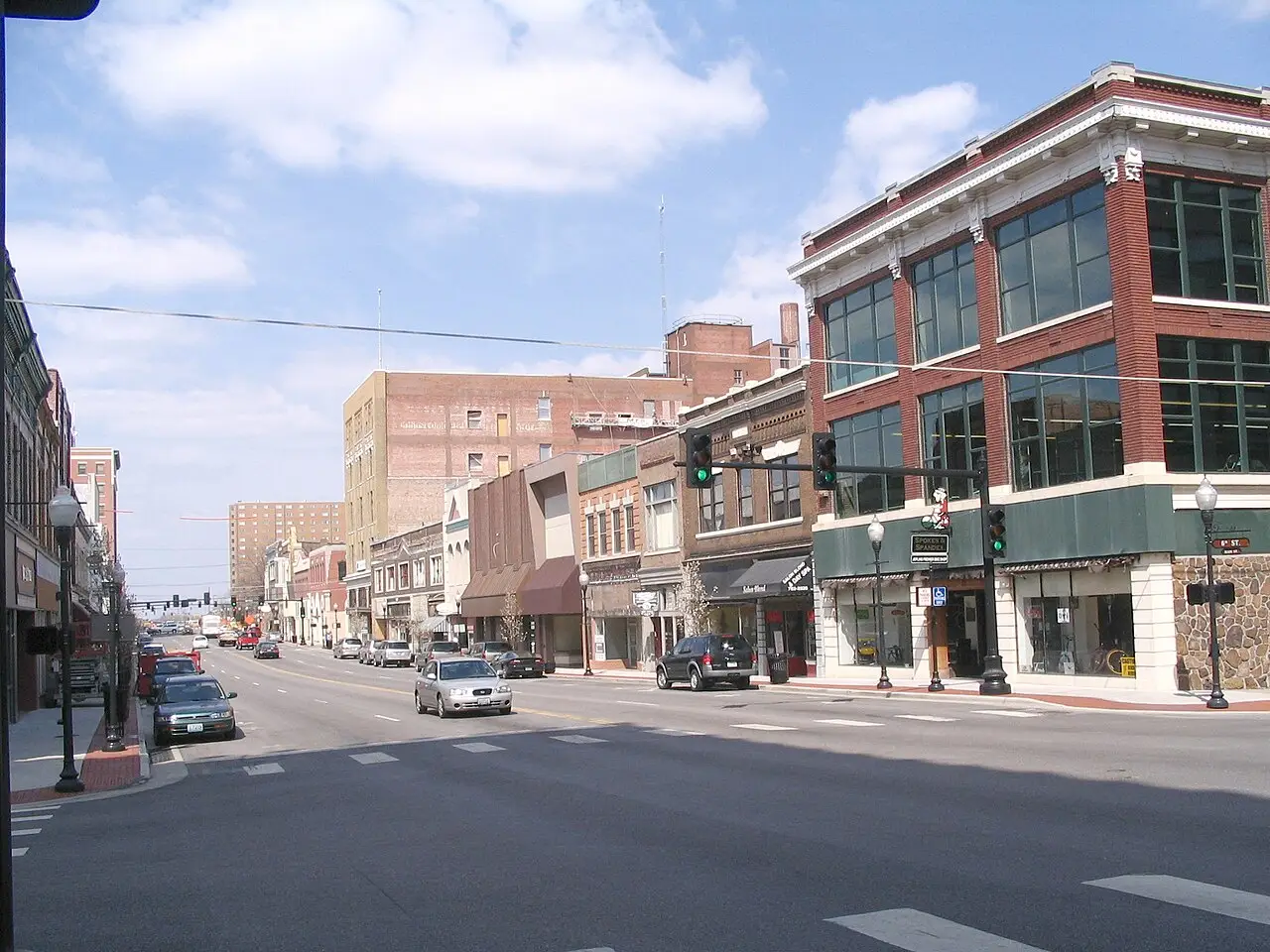
Route 66 zigzagged through town on Seventh Street, Main Avenue, Broadway and other streets, partly because mines under the road caved in. Downtown Main Street lies on the old highway, and the city has restored its facades and added old-style lamp posts and benches.
On the road, Lorecast plays these on its own as you drive past each place. Here you can listen first. Each story lists its sources.
HISTORY · TOLD BY MILES · 81 SEC
Bonnie and Clyde's Joplin hideout
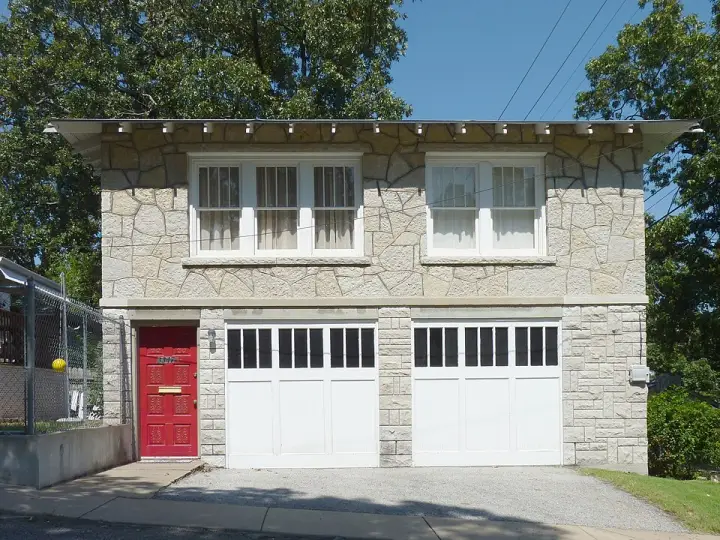
In April 1933, a two-story garage apartment in Joplin, Missouri, became the hideout for the Barrow Gang—Bonnie and Clyde, plus Clyde's brother Buck and his wife Blanche. Built around 1927, the Craftsman-style building had a double garage below. Clyde parked his stolen car in the left bay; Blanche and Buck had to rent space next door because a neighbor already claimed the right spot. For twelve days, the gang passed time playing cards, doing puzzles, and drinking newly legalized beer. Blanche did most of the cooking and washing. Bonnie and Blanche went to movies and shopped for knick-knacks at Kress' store. But the neighbors noticed loud, drunken card games—and an accidental discharge of Clyde's Browning Automatic Rifle. They reported suspicious men to police, who assumed they were bootleggers. On April 13, two carloads of officers pulled up. The gang was about to leave that day. Clyde opened fire instantly. Two policemen were killed. The gang escaped, leaving behind undeveloped photographs that later helped authorities track them down. Stolen merchandise tied them to a Joplin robbery. The apartment was added to the National Register of Historic Places in 2009.
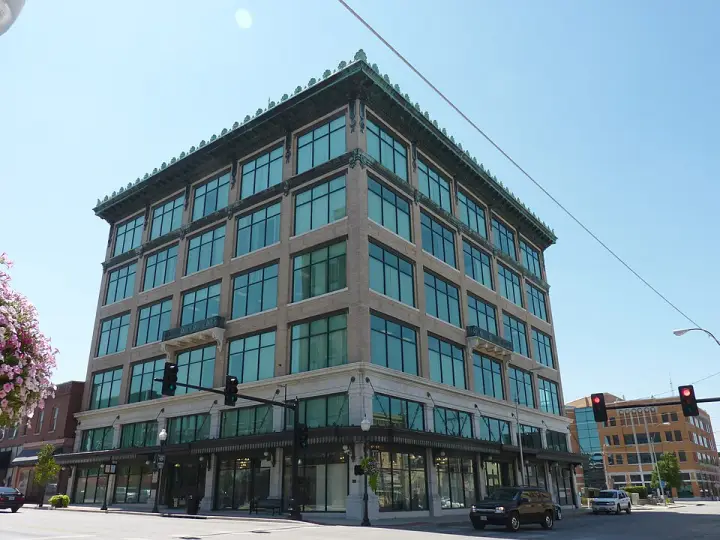
In 1907, Joseph Newman bought a whole block at 6th and Main in Joplin. His sons Albert and Sol had pushed him to expand their store into a high-rise department store. Local architect Austin Allen designed the building, and when it opened on November 16, 1910, it was the first in Joplin with elevators and electricity. Newman's Department Store operated there for 62 years, until 1972. After that, the building housed a bookstore, then a teen club called the Boulevard. In 1989, owner Kenny Cox fought the city's demolition plans. The building was saved, restored in 1995 for 5 million dollars, and later bought by the city in 2003. Today it houses Joplin city offices. Want to know more about the Newman Brothers Building?
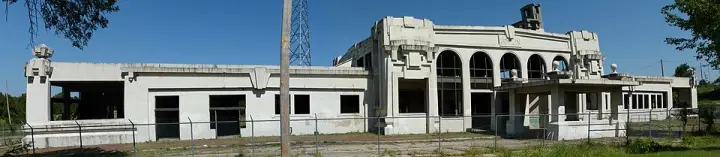
You know what's hiding in the concrete of this old station? Mining waste. The architect, Louis Curtiss, used it in the mix—and Popular Mechanics was so impressed they featured it in January 1912. But here's the real oddity: the station's last train, the Southern Belle, pulled out on November 4, 1969, ending 58 years of constant service. After that, the place just sat, slowly falling apart. Now it's a Place In Peril, and supporters are trying to find someone—anyone—to restore it. So this grand old depot, built with the leftovers of the mines, is waiting for a second act. Want to know more about the plans for its future?
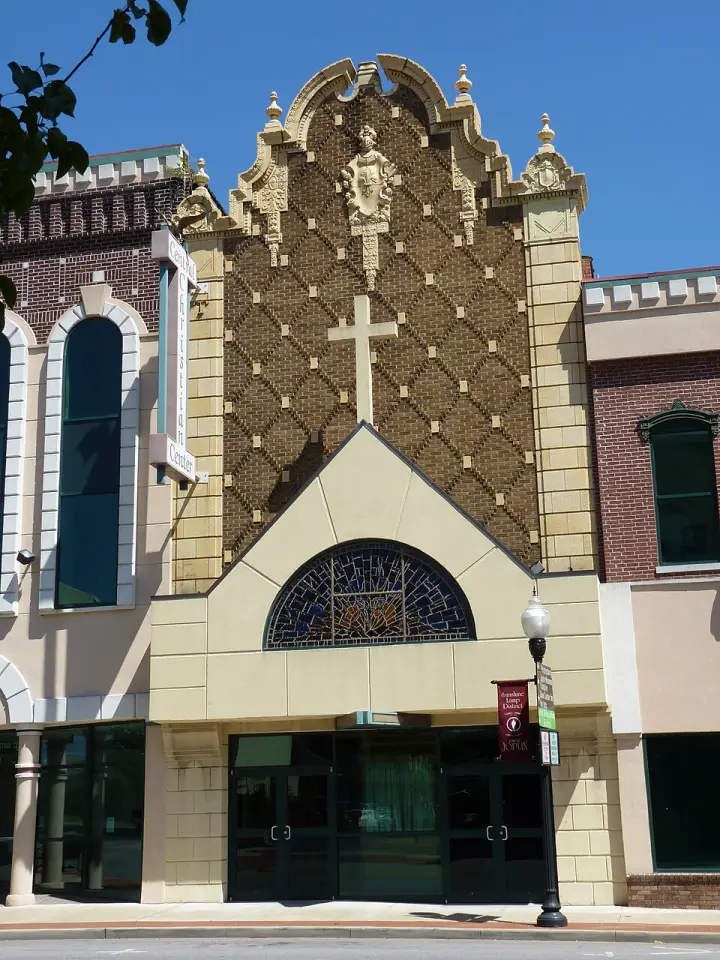
In Joplin, a 1930 movie theater made a surprising career change: it became a church. Fox Theater, built in 1930, is a two-story, L-shaped brick commercial building with Mission Revival detailing. Its ornate interior features extensive displays of plaster, metal, and wood decoration executed in Spanish Revival designs. But in 1974, the building was sold to the Central Assembly Church of Joplin. Today it's also known as Central Christian Center. The elaborate Spanish Revival ornament that once set the mood for moviegoers now surrounds a congregation. The theater earned its place on the National Register of Historic Places in 1990 and sits in the Joplin Downtown Historic District—a living example of architecture changing roles without losing its soul.
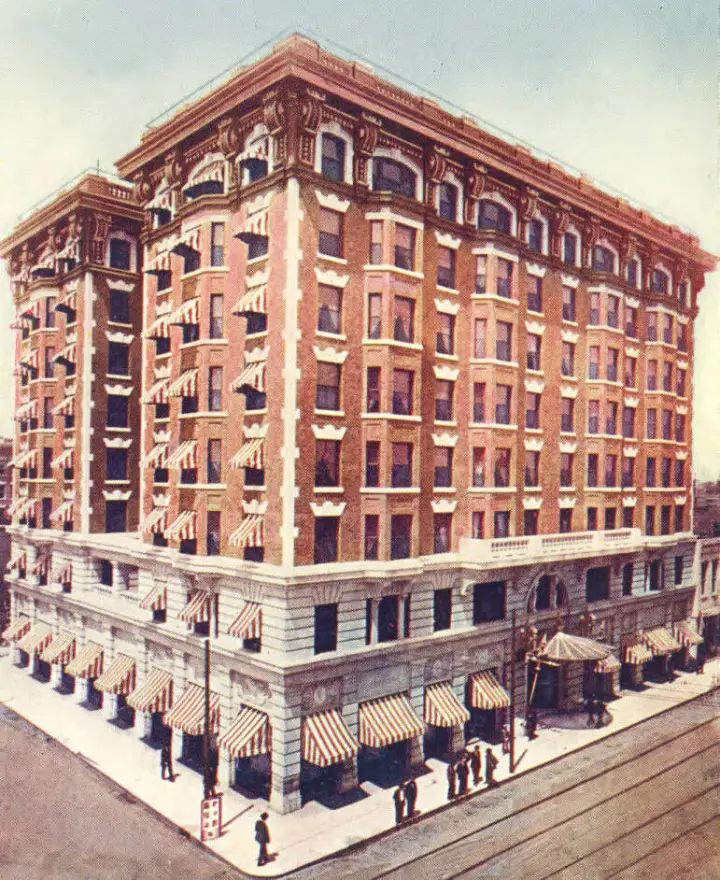
The Connor Hotel in Joplin was a Beaux Arts beauty at 324 Main Street, built between 1906 and 1908. It was the dream of Thomas Connor, a local millionaire who already owned the Joplin Hotel on that same spot. In 1906, he tore down his own three-story, 50-room hotel to build something grander. But Connor died in 1907 at age 60, before it opened. When the nine-story hotel debuted in 1908, it was named in his memory. At its peak, it welcomed 6,500 guests a month, with restaurants, a rooftop garden, even its own orchestra. But after the war, the hotel declined. It closed in 1969, and despite a petition with 3,214 signatures opposing demolition, the wrecking ball was set for November 12, 1978. One day before, the 1908 portion collapsed without warning. Three workers were inside. Two—Thomas Oakes and Frederick Coe—died. The third, Alfred Sommers, was rescued 82 hours later. The collapse made national news.
The 1910 department store on Main Street was the first building in Joplin with elevators and electricity. Saved from demolition in 1989, it now holds city offices.
A 1930 movie theater with Spanish Revival plaster, metal and wood decoration inside. A church bought it in 1974, and it is now the Central Christian Center.
Louis Curtiss’s 1911 station, built with mining waste in its concrete. The last train left in 1969; the depot stands empty while supporters look for someone to restore it.
Gone. The nine-story 1908 hotel at 324 Main Street collapsed on November 11, 1978, a day before its planned demolition, killing two workers. The site was cleared for a new city library.
A WPA stone marker from 1938 where Oklahoma, Kansas and Missouri meet, about 300 feet north of I-44. It stands 50 feet west of the true tripoint, which has had a stand-on plaque since 2004.
Lorecast plays short stories about the places around you, hands-free. Download Route 66 before you leave and it works offline. Route 66 is free through December 31, 2027.
How these stories are made
Lorecast stories are written with AI using only the sources listed under each story, and they are narrated with synthetic voices. An automatic check traces every name and date back to those sources, and legends are told as legends. Every story on this page was also checked against its sources before we published it here. If you spot a mistake, write to hello@lorecast.net.