One of Springfield’s nicknames is “The Birthplace of Route 66,” and the first historic marker on the highway was erected here.
530 mi from Chicago
5 stories to hear
Free in the app through 2027
Allow one cookie to recognise return visits? No cross-site tracking. Privacy
About Springfield
Springfield, the seat of Greene County, is the largest city in the Ozarks. It has been called the “Queen City of the Ozarks” since 1878, and its nicknames also include “The Birthplace of Route 66.”
In town, US 66 used Chestnut Expressway, College Street, St. Louis Street, Glenstone Avenue and Kearney Street, sharing the road with US 65 for several miles. Sites along it include the Shrine Mosque and the site of Red’s Giant Hamburg, believed to have been the world’s first drive-through restaurant.
On the road, Lorecast plays these on its own as you drive past each place. Here you can listen first. Each story lists its sources.
HISTORY · TOLD BY MILES · 56 SEC
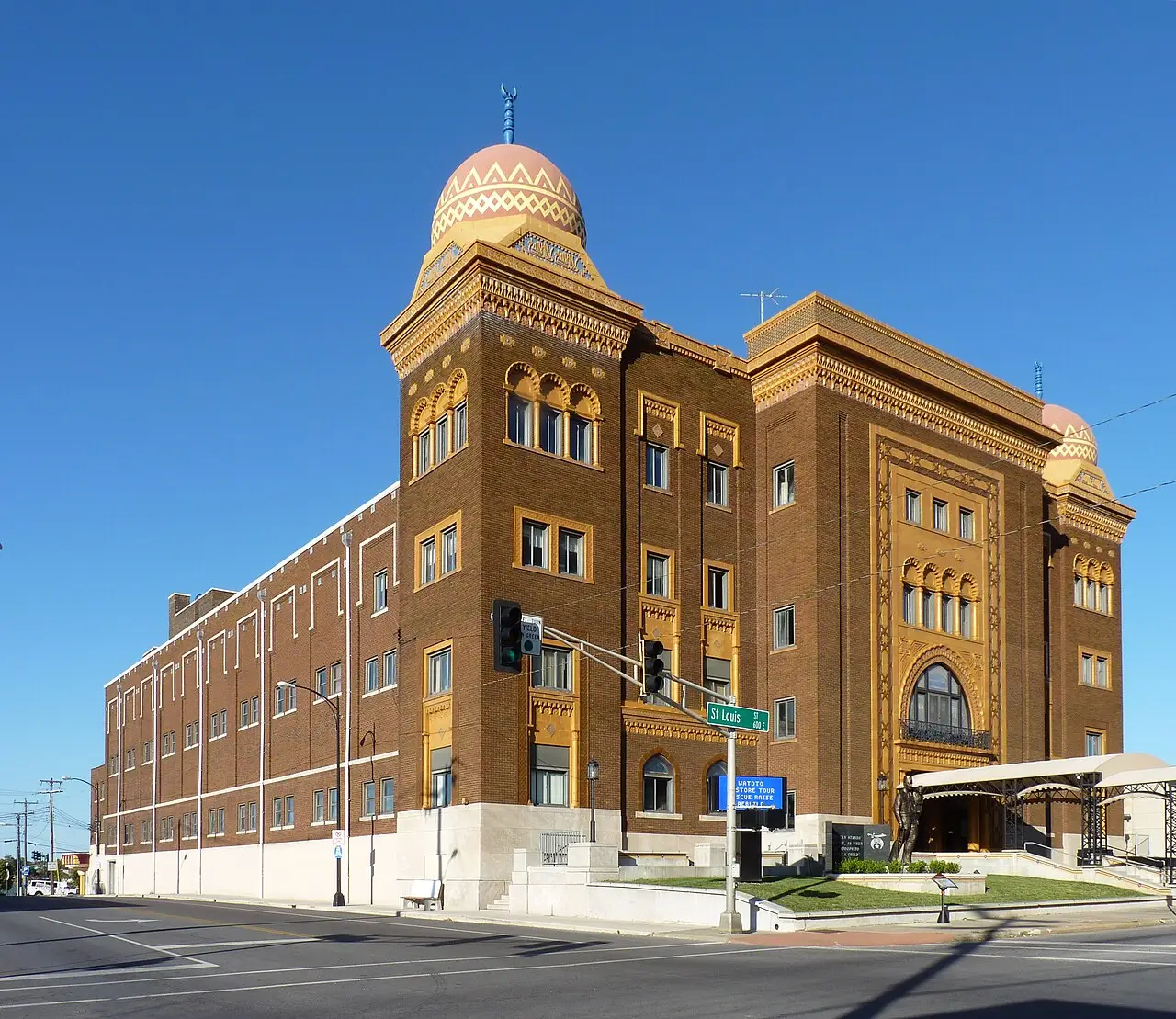
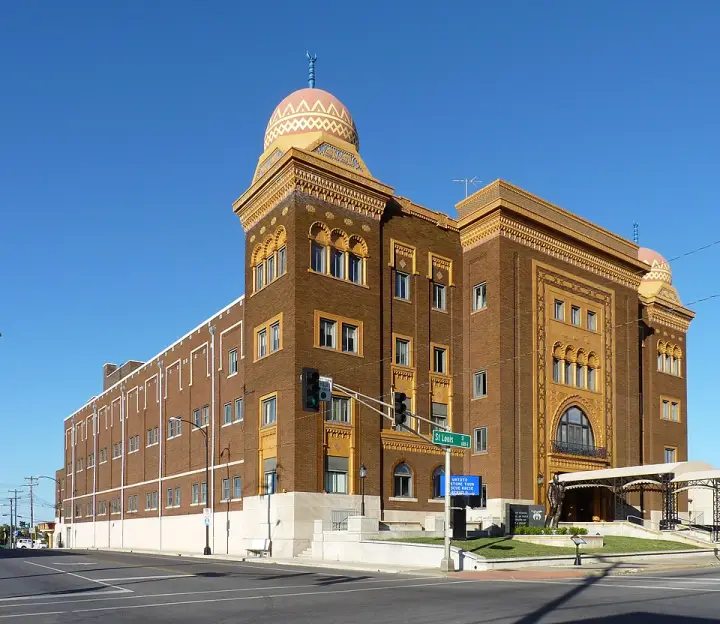
A Shrine Mosque named for a poem
In downtown Springfield, Missouri, there's a building that looks like it was lifted straight from a storybook — the Abou Ben Adhem Shrine Mosque. Built in 1923 for $600,000, it's a five-story arabesque structure with an auditorium seating over 4,000. For years, it hosted the annual Shrine Circus. But here's the thing: its name comes from a poem. Leigh Hunt's "Abou Ben Adhem" tells of a man who loved his fellow humans so much that an angel wrote his name in the book of gold. The Shriners named their mosque after that poem. It's a strange, beautiful choice — a fraternal order naming their temple after a literary character who simply loved his neighbor. The building was listed on the National Register of Historic Places in 1982. Want to know more about the Abou Ben Adhem Shrine Mosque?
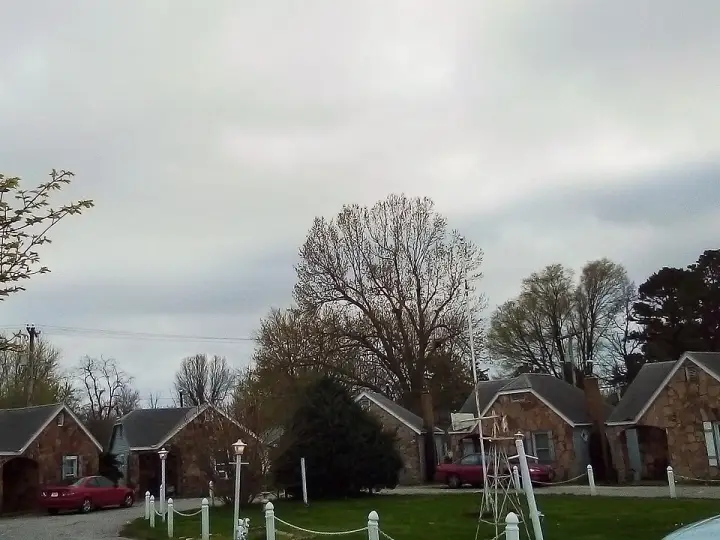
In 2003, a cluster of nine tourist cabins and a frame garage in Springfield, Missouri, earned a spot on the National Register of Historic Places. Built between about 1945 and 1952, these cabins formed Rock Fountain Court—a place where travelers pulled off the road for a night's rest. Each cabin is faced in stone: dark sandstone, white limestone accented with red brick. The court was also known as Melinda Court. Ten buildings and one structure survive, a quiet remnant of the roadside lodging boom after the war.
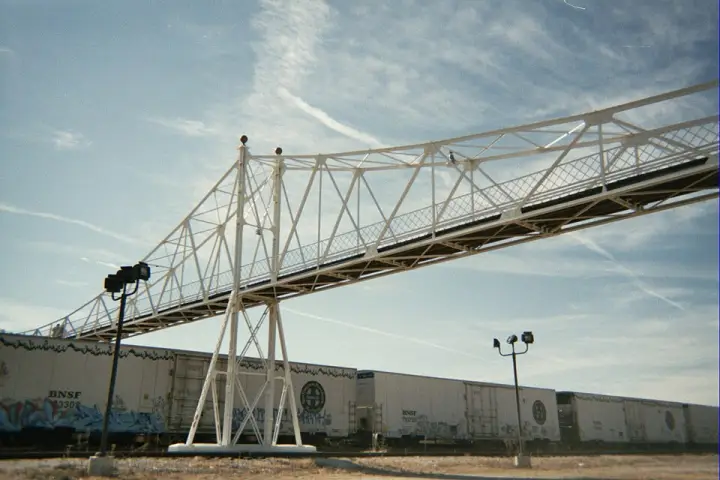
Imagine crossing 13 sets of railroad tracks on a single footbridge. That's the Jefferson Avenue Footbridge in Springfield, Missouri — built in 1902, stretching 562 feet. By its 100th birthday, it was falling apart. So the city and the Commercial Club teamed up, secured federal grants, and spent over $518,000 on a full rehabilitation between 2001 and 2002. It reopened on April 17, 2002, nearly a century after it first went up. Then, in 2023, the governor promised another repair, with the bridge walkable again by 2024 or 2025.
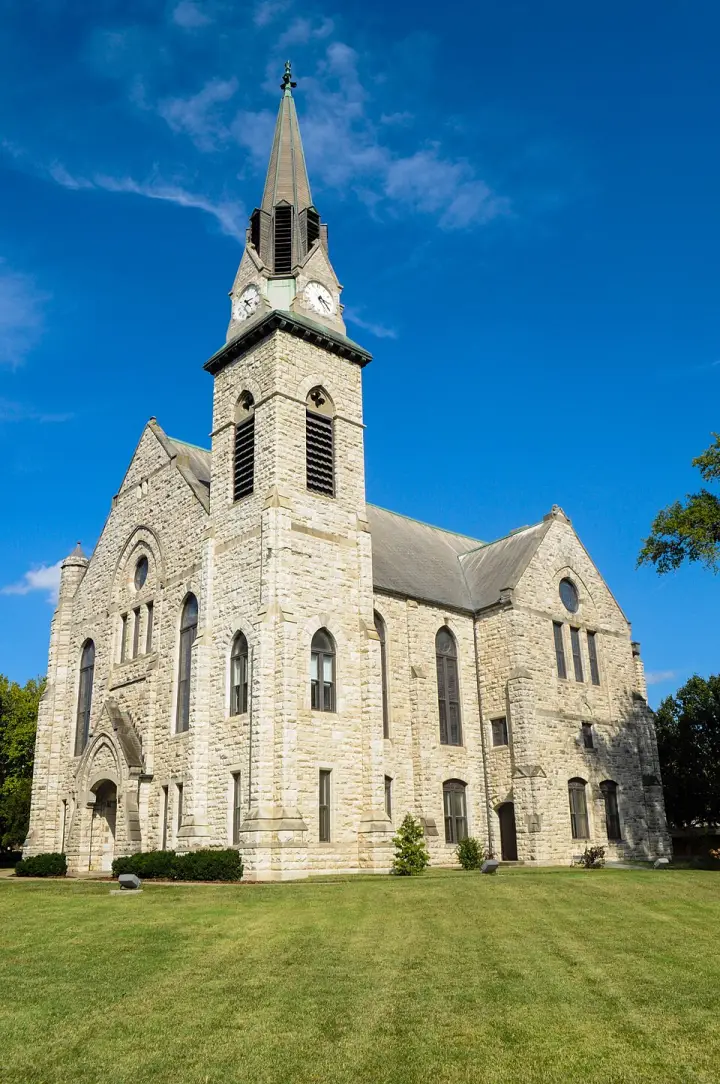
Here's a chapel that's older than it looks — built in 1880, the oldest stone structure in Springfield. But the real surprise? It's not just a pretty face. Inside, there's a pipe organ from 1906 that's been recently restored. A three-manual, 30-rank Lyon-Healy. And it's not just for show — organ students use it, weddings, the Christmas Vespers. The chapel's mellow acoustics make it sing. So while the stone walls are the first thing you notice, the sound is what stays with you.
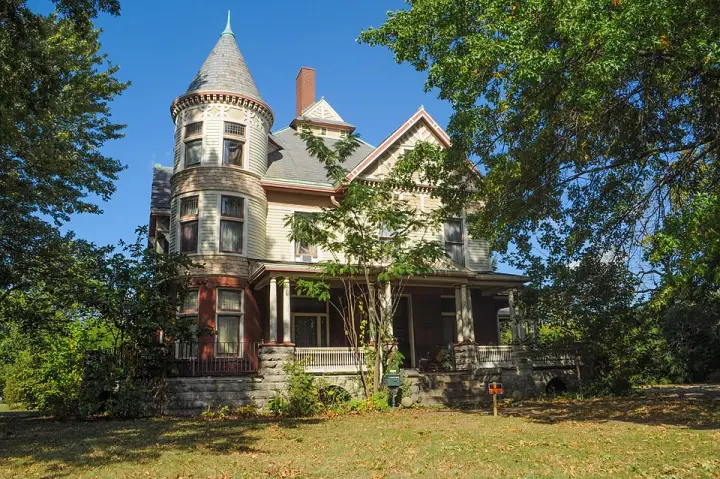
So here's a quiet little quirk: a house built to be one of the grandest homes in all of Springfield, used as a museum for years, and yet legally never left private ownership. The man behind it—Bently, president of the Bank of Springfield—built it in 1892 as a single family home, with all the Queen Anne trimmings: a two-story brick and frame, a prominent front tower with conical roof and spire, multiple porches, a porte cochere, decorative spindles. The home stayed in the Bently family until 1964, sold to Drury College in 1965. Then in 1977, Springfield established a local history museum called Museum of the Ozarks in the house. For a while, folks walked through as visitors—except the house itself? Still private. Because Drury College is a private school, the home technically maintained private ownership throughout its life. In 1993 the museum sought larger space and sold the home to a private resident, closing the loop. A public museum in a private home—go figure.
A five-story arabesque hall from 1923 with an auditorium for more than 4,000, for many years home of the annual Shrine Circus. It is one of the sites along Route 66 in Springfield.
Opened in 1926 with a 100-year lease on a 16-foot strip bordering Route 66, to draw highway travelers. Restored to its 1926 look, it reopened in 2006 and is now mainly a concert venue.
Built in 1880, the oldest stone structure in Springfield, on the Drury University campus. Its restored 1906 Lyon-Healy organ plays for recitals, weddings and the Christmas Vespers.
Gone. Believed to have been the world’s first drive-through restaurant, it served Route 66 travelers from 1947 to 1984. A re-creation of its sign went up in 2015.
Ripley’s Believe It or Not! called it the only US town with two main streets and no back alleys: Route 66 was built behind the shops, and the owners simply added new entrances, giving them two front doors.
Let Springfield tell its own stories as you drive in.
Lorecast plays short stories about the places around you, hands-free. Download Route 66 before you leave and it works offline. Route 66 is free through December 31, 2027.
How these stories are made
Lorecast stories are written with AI using only the sources listed under each story, and they are narrated with synthetic voices. An automatic check traces every name and date back to those sources, and legends are told as legends. Every story on this page was also checked against its sources before we published it here. If you spot a mistake, write to hello@lorecast.net.