Before it was Route 66, Missouri's road between St. Louis and Springfield was an Osage trail, then the Wire Road, then Route 14.
300 mi along our route
3 towns in this guide
19 stories to hear
Allow one cookie to recognise return visits? No cross-site tracking. Privacy
Route 66 in Missouri
Route 66 crossed roughly 300 miles of Missouri, from the Mississippi River in downtown St. Louis to the Kansas line west of Joplin, climbing into the Ozarks along the way.
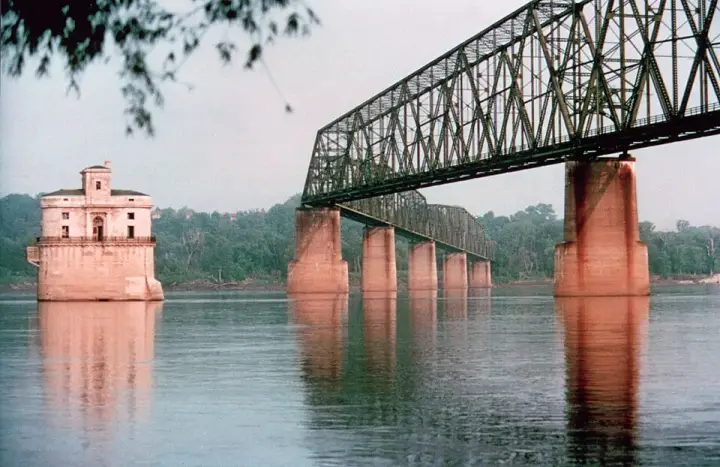
It began in 1922 as Route 14 and took the number 66 in 1926. The highway was realigned around St. Louis, Springfield and Joplin, and its St. Louis bypass crossed the Mississippi on the Chain of Rocks Bridge. Missouri put up the first historic marker on Route 66, in Springfield.
Interstate 44 now follows much of the old road between St. Louis and Springfield, and state routes such as 100, 266 and 96 carry other stretches of it.
Stories Lorecast plays on the open road in Missouri, in the order you reach them driving west.
HISTORY · TOLD BY MILES · 37 SEC
How Sullivan got its name
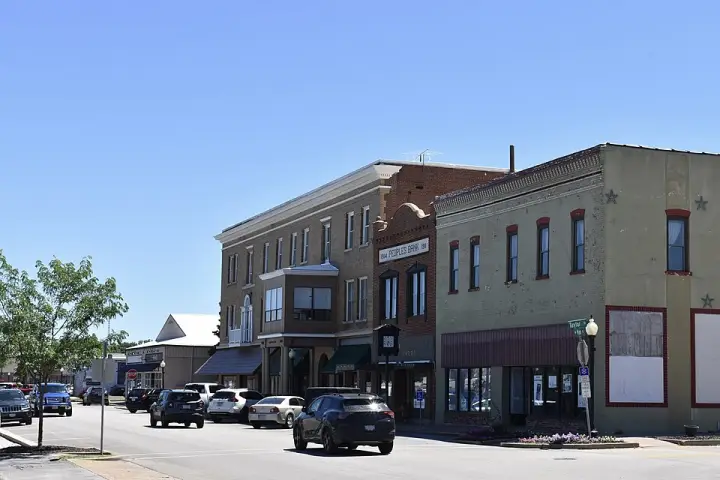
In 1856, this spot had a post office with a strange name: Mount Helicon. It was named after a mountain in Greece that, legend says, was the sanctuary of the Muses. But the name didn't stick. Stephen Sullivan, who owned the land, donated ground for a railroad right-of-way and built the depot himself. The railroad called the station "Sullivan," and the post office soon followed. That's how this city got its name—not from a poet, but from a man who gave away land for a train.
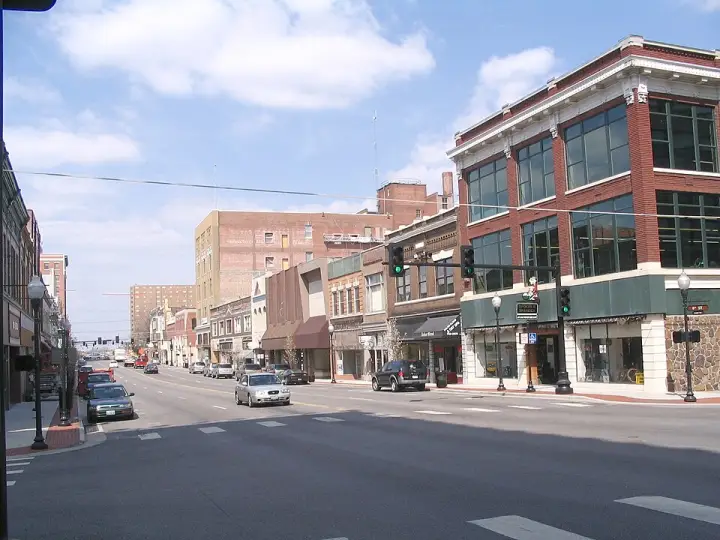
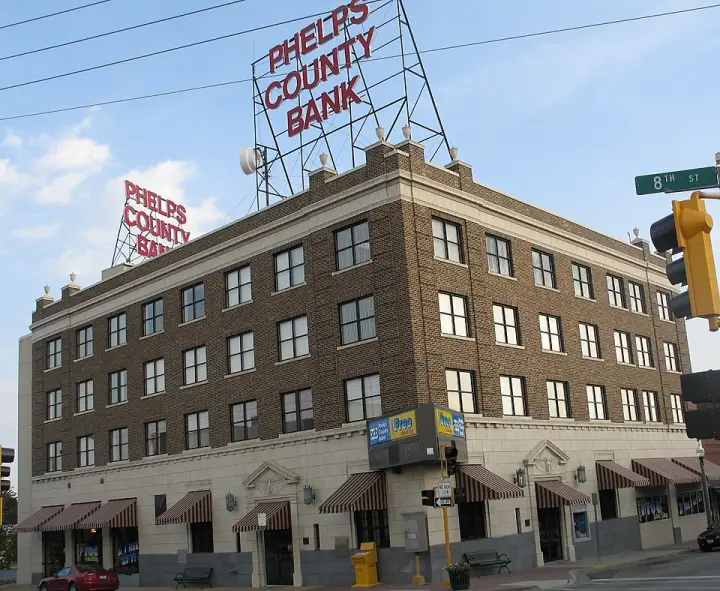
In March 1931, a building opened at 8th and Pine Streets in Rolla, Missouri, that would anchor downtown for decades. It housed two things: the National Bank of Rolla on the first floor, and the Edwin Long Hotel above. The hotel had 75 rooms, a coffee shop, and a basement banquet hall that could seat 350. A single bed cost two dollars a night; a double, three. And the location was perfect — right on historic Route 66. Travelers came by car and by train, and the hotel became the premier stop in town. Famous guests included President Harry Truman, actress Marilyn Monroe, and actor Victor Mature. But then Route 66 was rerouted in the late 1950s, bypassing downtown. Motels sprouted along the new highway. Passenger rail service ended. Business slowly declined, and the hotel closed in the early 1970s. The building was bought by Phelps County Bank, which restored the exterior in 2001 and still operates there today. The bank now uses the old banquet hall as a boardroom. So the building lives on — but the era of road-trippers and two-dollar rooms is gone.
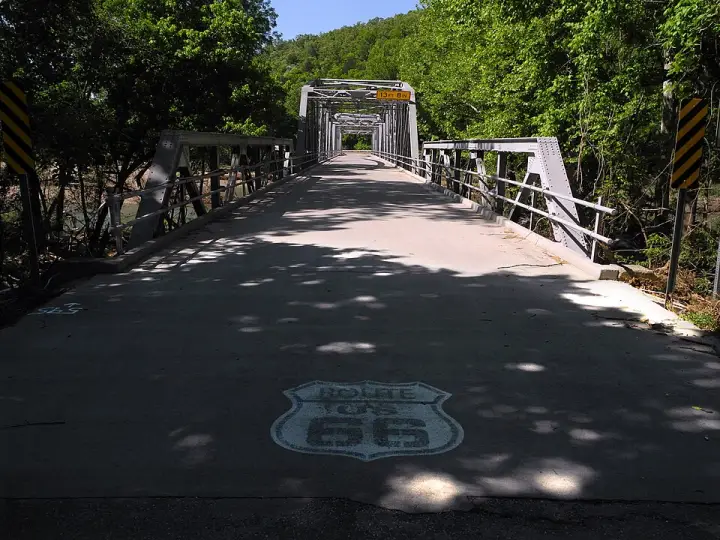
In the 19th and early 20th centuries, lumbermen were busy upstream on the Big Piney River, cutting shortleaf pine and hacking railroad ties from the hardwoods. They floated their planks and ties downstream to the railroad yard at Arlington on the Gasconade River. But first, they had to negotiate a tight, incised meander in the river—a bend so sharp that rafts sometimes broke up and ties were lost. The rafters named it the Devil's Elbow. That name stuck, and the unincorporated community that grew here on historic U.S. Route 66 took it too. Today, the river still bends, but the rafts are long gone. Want to know more about the lumbermen and their wild ride?
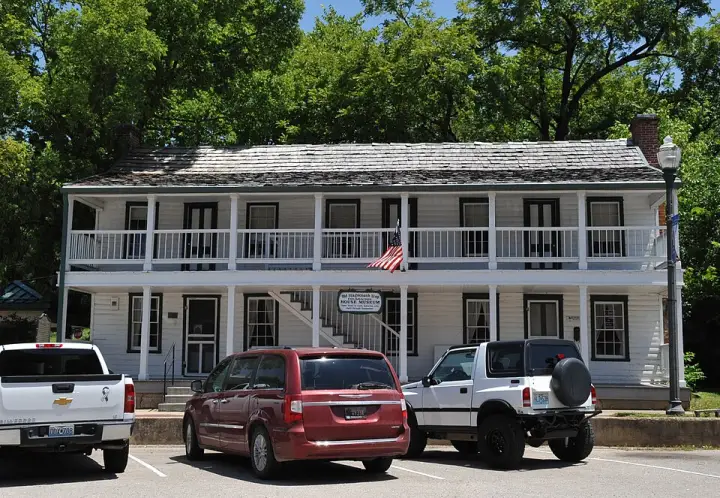
The Old Stagecoach Stop in Waynesville, Missouri started as a one-story log building in the early 1850s, built by William Walton McDonald. It was a stagecoach stop and post office before the Civil War. Then the war came. In June 1862, Union Colonel Albert Sigel commandeered the building as a post hospital. Soldiers occupied the town until 1865. After the war, Alexander Bryan bought it in 1870, added a second story, and turned it into a ten-room hotel called the Waynesville House. For the next 110 years, it housed soldiers through both world wars, Korea, and the early Vietnam years, plus tourists on Route 66. But by the 1950s and 60s, it deteriorated. New motels near expanding Fort Leonard Wood made it obsolete. By the late 1960s, it was vacant. In 1980, it was listed on the National Register as the Old Stagecoach Stop, but that didn't save it. In December 1982, the city condemned it as a hazardous building. Local citizens formed the Old Stagecoach Stop Foundation in June 1983, bought it for $50,000, and spent nine years fundraising—bake sales to concerts—to pay off the note by spring 1992. Today it's a museum, each room restored to a different period.
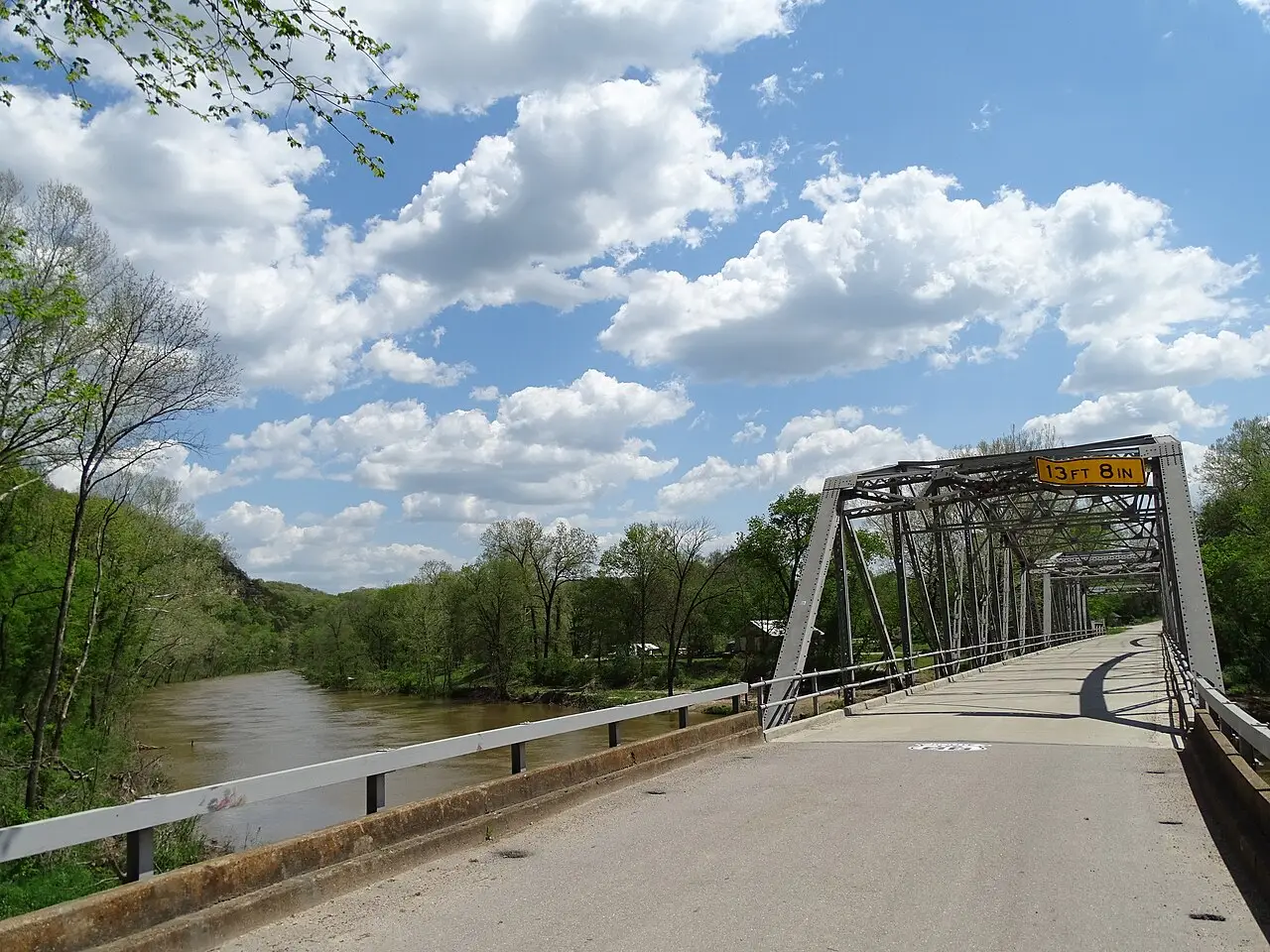
Between Missouri and Oklahoma, Route 66 clips the southeastern corner of Kansas, in Cherokee County, passing through Galena, Riverton and Baxter Springs. Its National Register landmarks include the Brush Creek Bridge and the Baxter Springs Independent Oil and Gas Service Station, now a Route 66 tourist information site. When Interstate 44 came through in 1961, it crossed straight from Oklahoma into Missouri and missed Kansas by about a quarter mile.
Lorecast does not have stories for the Kansas stretch yet.
Lorecast plays short stories about the places around you, hands-free. Download Route 66 before you leave and it works offline. Route 66 is free through December 31, 2027.
How these stories are made
Lorecast stories are written with AI using only the sources listed under each story, and they are narrated with synthetic voices. An automatic check traces every name and date back to those sources, and legends are told as legends. Every story on this page was also checked against its sources before we published it here. If you spot a mistake, write to hello@lorecast.net.