New Mexico’s most populous city, where Route 66 moved onto Central Avenue in 1937 and most surviving Route 66–era buildings stand.
1,380 mi from Chicago
5 stories to hear
Free in the app through 2027
Allow one cookie to recognise return visits? No cross-site tracking. Privacy
About Albuquerque
Albuquerque was founded in 1706 as La Villa de Alburquerque, an outpost on El Camino Real. When the railroad arrived in 1880 it bypassed the old plaza, and New Town grew up around the depot about two miles east. The plaza survives as Old Town.
The first Route 66 travelers reached Albuquerque in 1926, and dozens of motels, restaurants and gift shops followed. The highway first ran north–south along Fourth Street; in 1937 it moved to Central Avenue, a more direct east–west route.
On the road, Lorecast plays these on its own as you drive past each place. Here you can listen first. Each story lists its sources.
QUIRKY · TOLD BY MILES · 82 SEC
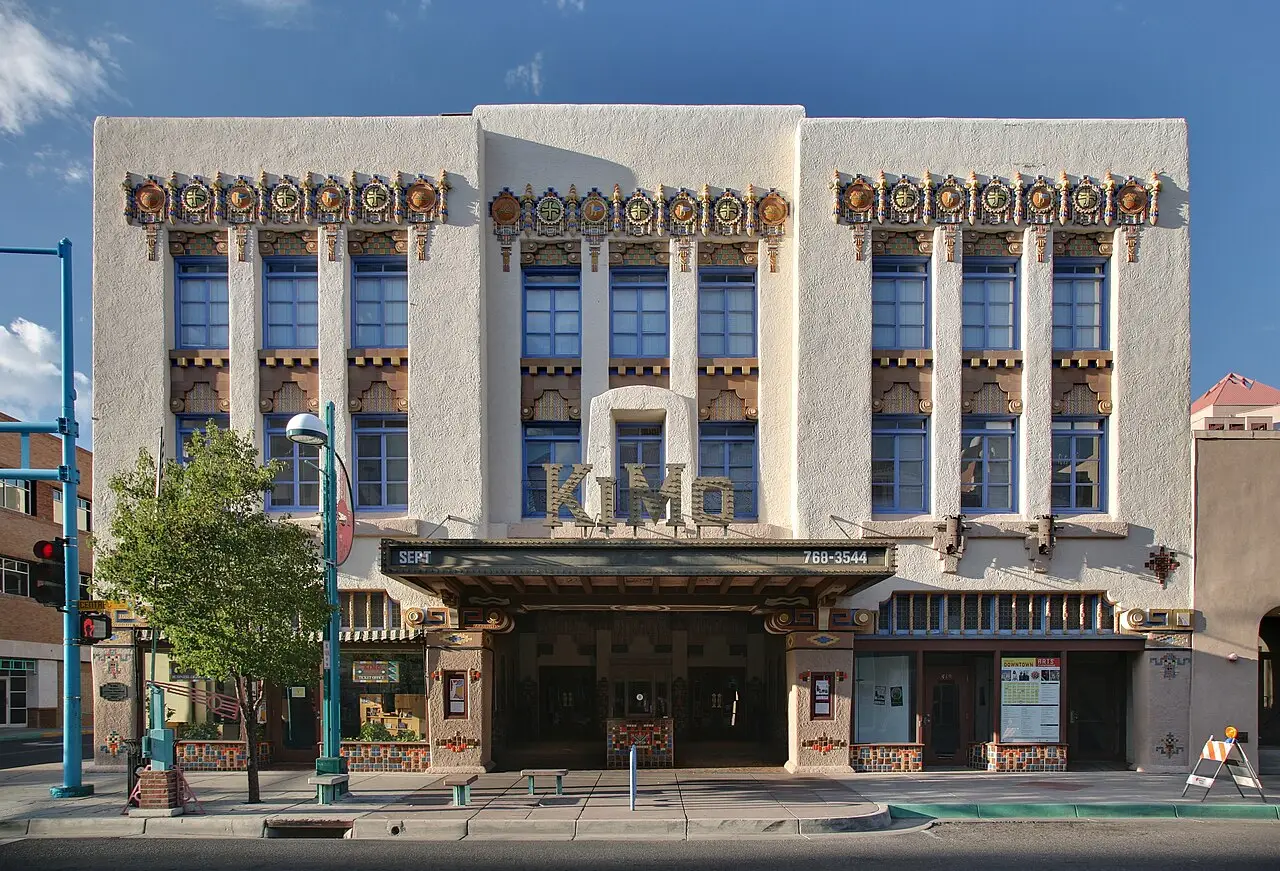
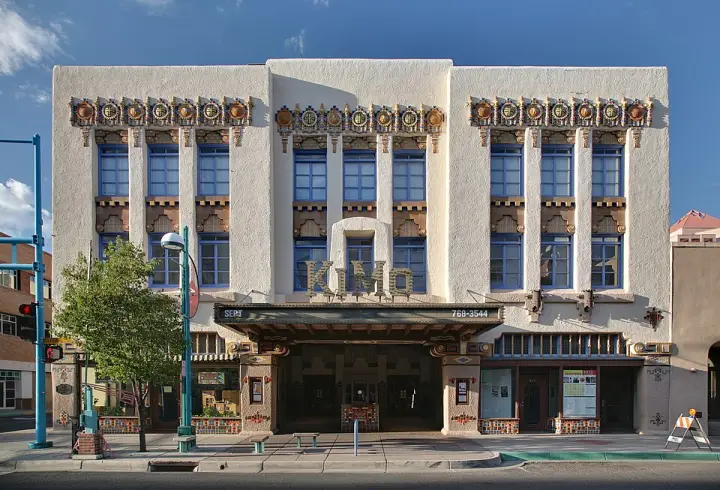
How the KiMo got its name
What do you get when you ask the public to name a theater, with the rule that the name must be six letters or fewer and honor Native American culture? Over 500 entries poured in. The winner? Pablo Abeita, former governor of Isleta Pueblo, who suggested "Kimo" — meaning mountain lion, sometimes translated as "king of the beasts." That's how this 1927 Pueblo Deco gem got its name. The building itself is a mashup: adobe-style rounded corners, Art Deco vertical lines, and indigenous motifs like terra cotta shields. Inside, the details are a tribute to the Native Americans who embraced the Italian-American Bachechi family, who built it. The opening night featured Native dancers and a $18,000 Wurlitzer organ. Later, the theater fell on hard times — adult films, a fire, near-demolition. But the city bought it, restored it, and even recreated its original neon sign in 2011. As for the ghost of a six-year-old boy named Bobby Darnall, said to haunt the place? A writer who investigated found the story didn't hold up — and Bobby's siblings felt exploited by it. So the real spirit here might just be the building itself, stubbornly surviving.
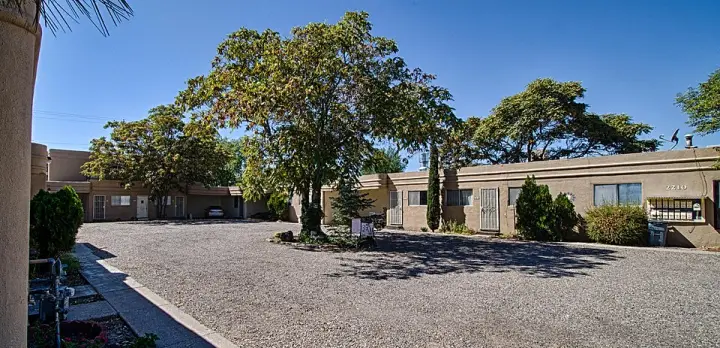
You might think a motel from the 1930s on a former U.S. highway is just a relic. But the Tower Court, on Central Avenue, is one of only a few such motels left in the city. Built as a U-shaped, flat-roofed building with 16 units around a central parking area, it's mostly one story—except the central section, which rises to two stories, reached by an interior staircase. The stuccoed walls have rounded corners and horizontal decorative moldings, modest Streamline Moderne touches. In 1993, it was added to the New Mexico State Register of Cultural Properties and the National Register of Historic Places. So it's not just surviving—it's recognized.
The La Mesa Motel was built in 1938 on Central Avenue—once the main drag of Route 66 through Albuquerque. It was a modest one-story building with just 14 rooms, each facing the parking lot except the northernmost unit, which jutted east and faced south. The design borrowed Pueblo Revival touches: vigas, curved parapets, small porches with corbeled wooden posts, and a battered chimney. The office and manager's residence sat at the front; the office was probably added later. For decades it was one of the best-preserved prewar Route 66 motels left in the city. But in March 2003, it was demolished to make way for a larger two-story motel.
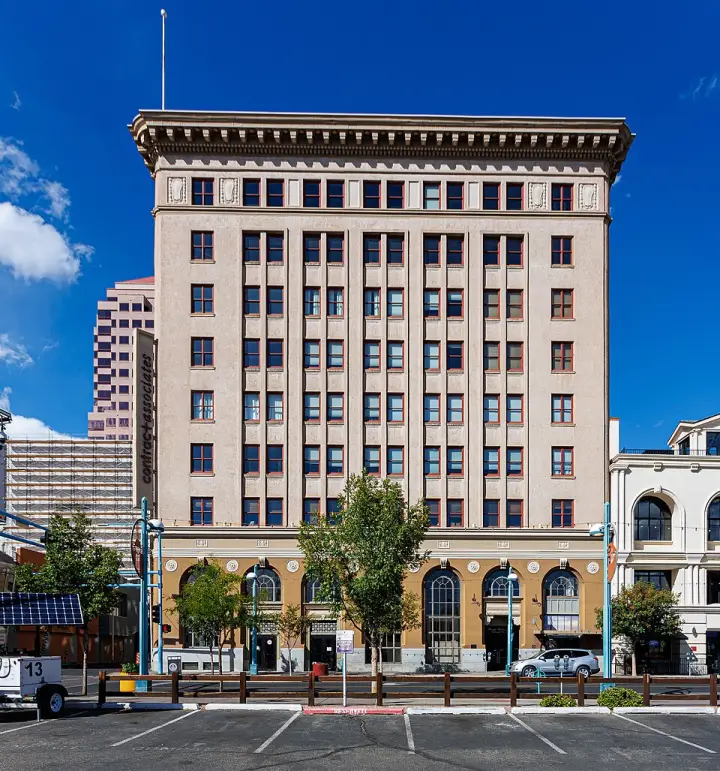
Why would a nine-story bank fill its blank walls with mirror-backed arches? In 1923, Albuquerque's First National Bank Building was the tallest thing in town, 141 feet of concrete and confidence. The architect, Henry C. Trost, gave the two-story banking hall a row of 22-foot arched windows—real ones, running right around the corner and even into the alley. But where there was no window, he put a mirror, so the room would look bigger than life. A letter from the bank said Trost "seemed to catch our ideas... and put them on paper immediately," and that it required "an artist like Mr. Trost to give a building distinction and individuality." That little trick with the mirrors says a lot: a bank that wanted to feel monumental. It kept the title of tallest until 1954, then went through owners, a planned hotel, and finally became condos called The Banque Lofts in 2006. The old banking hall was renovated in 2017, but the vault is still there.
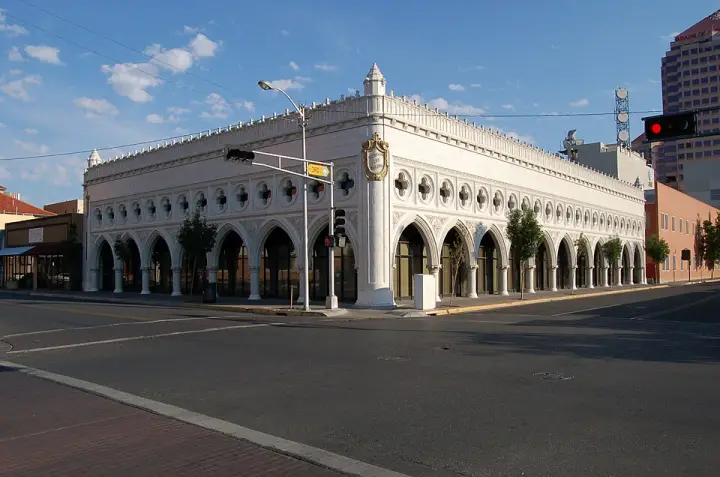
The Occidental Life Building in downtown Albuquerque looks like it was airlifted straight from Venice. Its white terra cotta facade, with pointed arches and quatrefoil windows, was modeled after the Doge's Palace — an odd sight in the New Mexico desert. The Venetian Gothic design was reportedly suggested by the company's vice president, George Roslington, a native of England. The building opened on August 1, 1917, with a ceremony attended by an estimated 1,000 people. But just sixteen years later, early on the morning of April 25, 1933, a fire gutted the interior. The exterior walls held, and architect W. Miles Brittelle rebuilt the roofline to look even more Venetian, adding an ornamental frieze and finials. The fire had come just hours after another Albuquerque landmark burned, leading police to suspect arson.
A 1927 Pueblo Deco theatre at Central Avenue and Fifth Street, built as a tribute to Native Americans. Restored by the city, it is open again for performances; a replica of its neon sign went up in 2011.
Nine stories, completed in 1923 at Third Street and Central Avenue, and considered the city’s first skyscraper. It stayed the tallest building in town until 1954 and opened as The Banque Lofts condominiums in 2006.
A 1917 office building at Third Street and Gold Avenue, its white terra cotta facade modeled on the Doge’s Palace in Venice. It was rebuilt after a 1933 fire with an even more Venetian roofline.
A 1937 Pueblo Revival motor court on old Route 66. Saved from redevelopment as a city landmark in 2008 and bought by the city in 2010, it reopened in 2018 with a pool, small shops and a tap room.
A 1939 motel on Central Avenue, one of only a few 1930s motels left in the city. Its 30-foot stepped tower, which gave the motel its name, has been removed.
Gone. The 1938 Pueblo Revival motel on Central Avenue, listed on the National Register in 1993, was demolished in March 2003 and replaced by a larger two-story motel.
A 1933 Parker through truss bridge about 19 miles west of Albuquerque that carried Route 66 over the Rio Puerco. Bypassed in 1999, it is now open to pedestrians only.
Let Albuquerque tell its own stories as you drive in.
Lorecast plays short stories about the places around you, hands-free. Download Route 66 before you leave and it works offline. Route 66 is free through December 31, 2027.
How these stories are made
Lorecast stories are written with AI using only the sources listed under each story, and they are narrated with synthetic voices. An automatic check traces every name and date back to those sources, and legends are told as legends. Every story on this page was also checked against its sources before we published it here. If you spot a mistake, write to hello@lorecast.net.