The most populous city on Route 66 between Albuquerque and Flagstaff, on the edge of the Navajo reservation.
1,530 mi from Chicago
3 stories to hear
Free in the app through 2027
Allow one cookie to recognise return visits? No cross-site tracking. Privacy
About Gallup
Gallup was founded in 1881 as a railhead for the Atlantic and Pacific Railroad and named for David Gallup, its paymaster. On the edge of the Navajo reservation and home to members of many tribes, it is known as the “Heart of Indian Country.”
Historic Route 66 runs through the center of town, and Gallup is named in the song “(Get Your Kicks on) Route 66.” In the 1940s and 1950s the rugged country around it drew Hollywood Westerns, and their casts and crews stayed at the El Rancho Hotel.
On the road, Lorecast plays these on its own as you drive past each place. Here you can listen first. Each story lists its sources.
HISTORY · TOLD BY MILES · 58 SEC
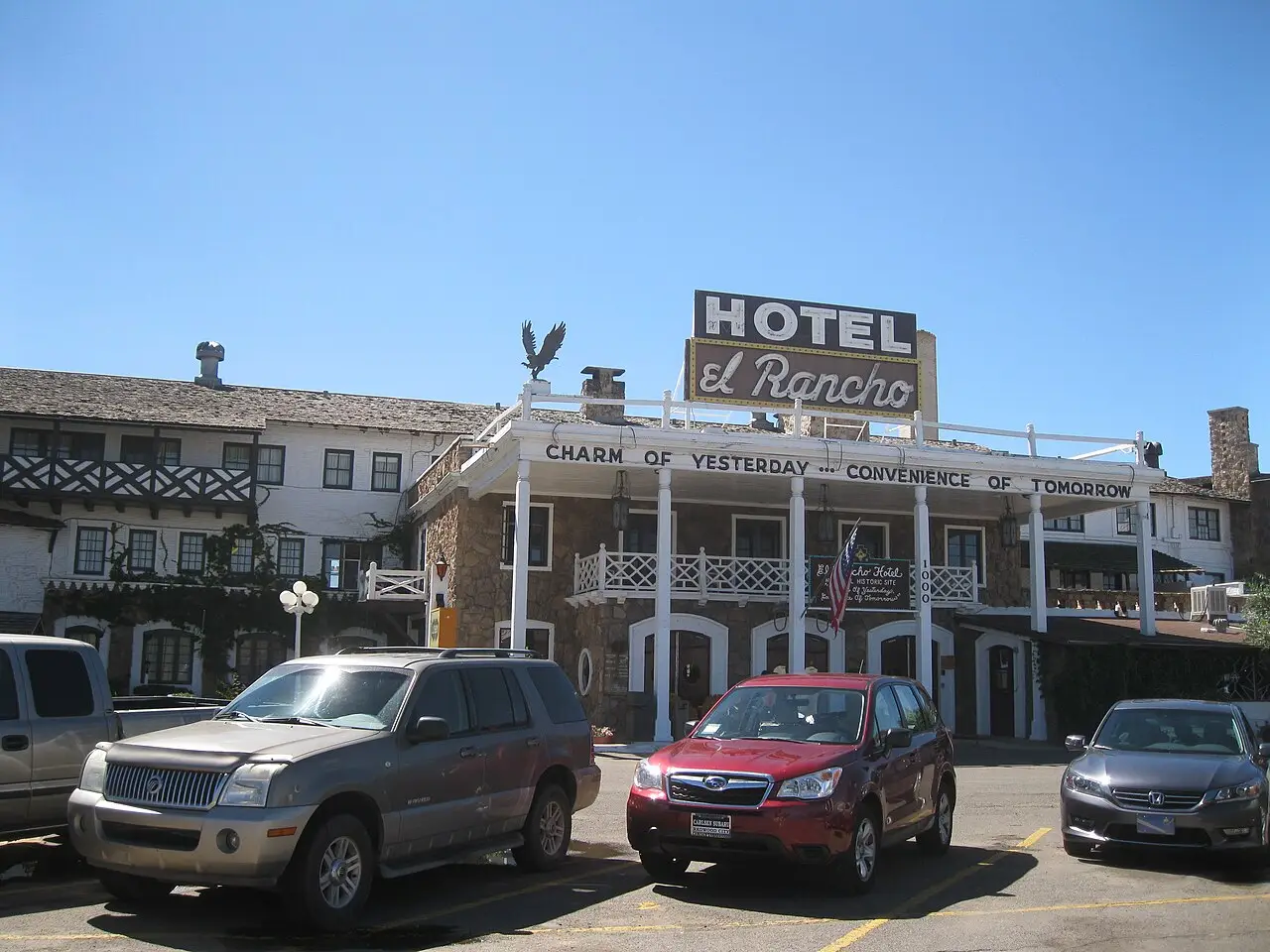
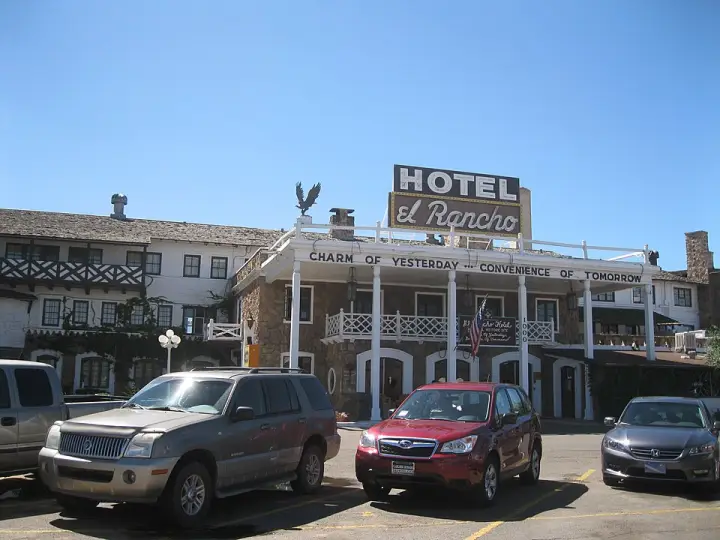
El Rancho, Hollywood’s hotel on Route 66
El Rancho Hotel wasn't just another roadside stop on Route 66; it was a temporary home for the stars of Hollywood. You might expect a standard desert lodge, but instead, you find this rambling three-story building with a large portico and a central balcony that looks like something from a Southern plantation. It has what the National Park Service calls a "rusticated fantasy appearance," built with brick, random ashlar stone, rough-hewn wood, and heavy chimneys. This specific atmosphere was no accident. The hotel was built by "Griff" Griffith—the brother of film director D.W. Griffith—and together, the brothers worked to encourage early film production right here in the surrounding area. It’s a place where the rugged landscape meets the glamour of the silver screen.
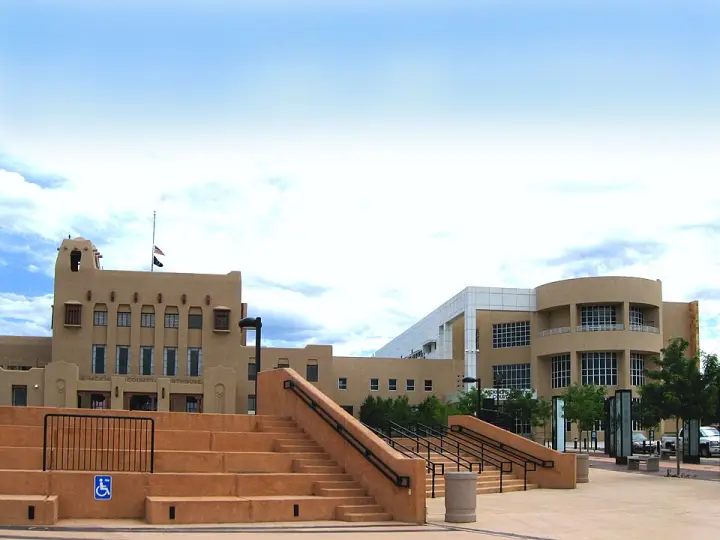
The McKinley County Courthouse in Gallup, New Mexico, was built in 1938–39. It was designed by El Paso, Texas, architects Trost & Trost. But here's the thing: inside, it holds major works of WPA art. Who painted them? The records don't say. The building was listed on the National Register of Historic Places in 1989.
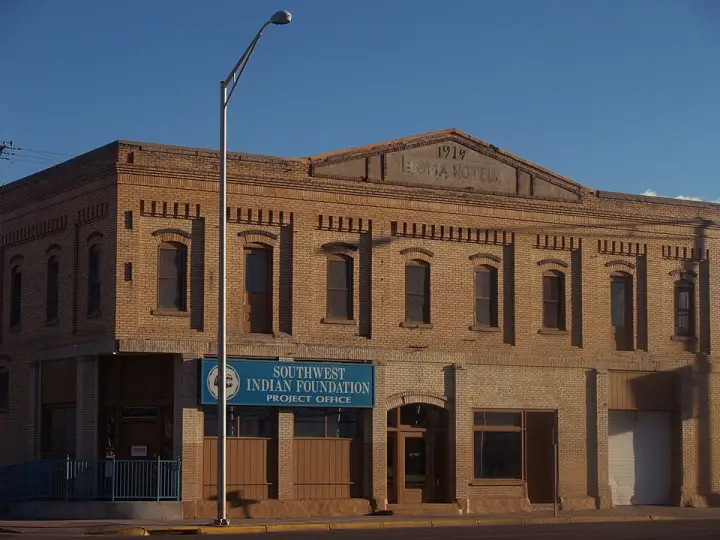
What do you call a hotel that's gone by two very different names? In Gallup, New Mexico, the Drake Hotel was built in 1919 — and somewhere along the way, it became known as the Turquoise Club. Listed on the National Register of Historic Places in 1988, the paperwork describes its style as "Decorative Brick Commercial." But it's the other name that makes you pause. Drake — a straightforward hotel name. Turquoise Club — that's a whole different mood. Same building, two identities. Which name came first? The records we have don't say whether the club was a later chapter or an earlier one. But there's something quietly funny about a historic landmark that couldn't stick to a single story. A hotel by one name, a club by another — and both names made it into the official record.
A rambling three-story hotel on old Route 66, built by R.E. “Griff” Griffith, brother of D.W. Griffith, and a temporary home for Hollywood stars. Rooms in the main building carry the names of former guests.
The 1918 depot, still an Amtrak station and since 1996 the Gallup Cultural Center, with exhibits on Native American arts and Route 66. Mary Colter’s El Navajo Hotel beside it was demolished in 1957 to widen Route 66.
Built in 1931 as Jim’s Modern Court and renamed in 1952. It is described as “one of the best examples of a largely unaltered pre-World War II tourist court remaining along Route 66 in New Mexico.”
Built in Grants in 1935 as a Standard Oil station on Route 66, it moved to Thoreau in 1937 as the first business on the highway’s new alignment. It was a filling station until 1963, then a repair garage.
A Warren deck truss bridge over Querino Canyon, about four miles southwest of Houck, Arizona, built in 1929 when the Arizona Highway Department rerouted Route 66 between Sanders and Lupton.
Lorecast plays short stories about the places around you, hands-free. Download Route 66 before you leave and it works offline. Route 66 is free through December 31, 2027.
How these stories are made
Lorecast stories are written with AI using only the sources listed under each story, and they are narrated with synthetic voices. An automatic check traces every name and date back to those sources, and legends are told as legends. Every story on this page was also checked against its sources before we published it here. If you spot a mistake, write to hello@lorecast.net.